
My closet used to be a disaster zone. I had over eighty pieces of clothing crammed onto one rod, and most mornings I still stood there saying I had nothing to wear. Learning the real capsule wardrobe essentials is what finally fixed that. Sound familiar?
The breaking point came when I was packing for a work trip and spent forty five minutes trying on outfits, throwing half of them on the bed, and still leaving the house in something I didn’t even like. That night I sat on my bedroom floor surrounded by clothes and finally admitted the problem wasn’t my wardrobe size. It was that none of it worked together.
That’s when I stumbled onto the idea of a capsule wardrobe. Not through some fashion influencer, but through a coworker who always looked put together with what seemed like the same ten outfits on rotation. I asked her about it over lunch one day, and she laughed and said, “That’s the point.”
A few months later, my closet went from eighty something pieces to around thirty five, and getting dressed stopped feeling like a chore. Let me walk you through what actually worked, what didn’t, and how you can build one without losing your personal style in the process.
What Capsule Wardrobe Essentials Actually Means
A capsule wardrobe is a small, intentional collection of clothes that all mix and match well together. The idea isn’t about owning as little as possible for the sake of it. It’s about owning clothes you actually wear, in colors and styles that pair easily. Once you understand the core capsule wardrobe essentials, the rest of the process gets a lot less overwhelming.
For a broader look at where this concept came from, Wikipedia has a solid overview of the capsule wardrobe and how the term evolved over the decades.
Most people land somewhere between 30 and 50 pieces, including shoes and outerwear, though there’s no strict rulebook here. Some people prefer 25 items, others feel comfortable with 45. The number matters less than the principle behind it.
The goal is simple. Every piece should work with several other pieces, so you can create multiple outfits without owning a mountain of clothes.
Why I Actually Stuck With It
I’ve tried minimalist trends before and abandoned most of them within weeks. This one stuck, and I think it’s because the benefits showed up almost immediately.
Mornings got faster. I wasn’t standing there decision paralyzed anymore because everything in my closet actually worked.
Laundry got simpler too. Fewer clothes meant fewer loads piling up, and I stopped losing socks in the mysterious black hole that apparently exists in every washing machine.
The biggest surprise was financial. I used to buy clothes impulsively, maybe a top here or a dress there, without thinking about whether it matched anything I owned. Once I had a clear system, I stopped buying things that didn’t fit the plan. My clothing spending dropped noticeably over the following year.
Step by Step: Building Your Own Capsule Wardrobe Essentials
Here’s the process I used, adjusted after a few early mistakes.
Step 1: Clear everything out first
Before adding anything, take everything out of your closet. Every shirt, every pair of pants, all of it, laid out on your bed or floor.
This part is uncomfortable but necessary. You’ll be surprised how many things you forgot you owned, and how many still have tags on them.
Step 2: Sort into three piles
Keep, donate, and maybe. The maybe pile is important because forcing instant decisions on sentimental or expensive items usually backfires. Give yourself permission to revisit that pile after a week.
I made the mistake of donating a leather jacket during my first round, only to regret it two months later when fall weather hit. Lesson learned. Slow down on anything you’re unsure about.
Step 3: Identify your color palette

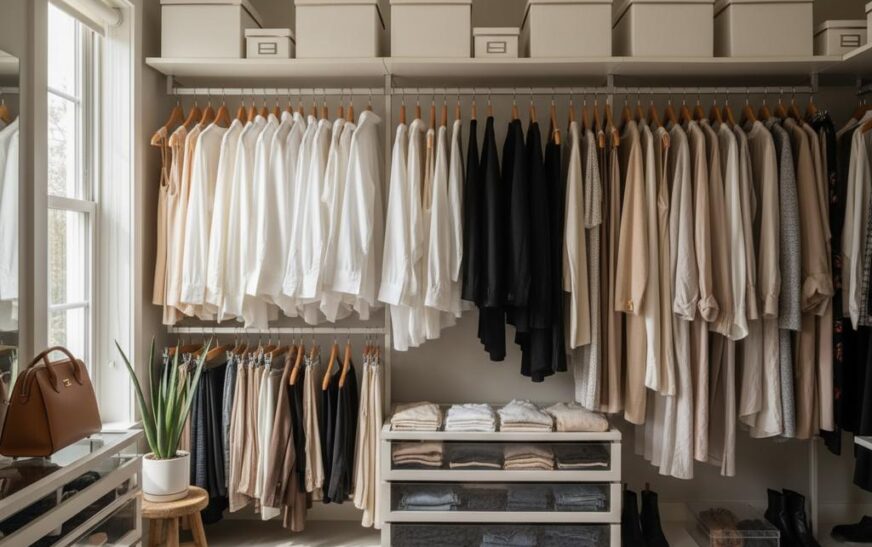
Pick two to three neutral base colors, like black, white, navy, or beige, then add one or two accent colors you genuinely love wearing.
My base ended up being black, white, and olive green, with denim blue as a workhorse neutral. Almost everything I own now pairs with at least three other pieces because the colors were chosen on purpose, not randomly.
Step 4: Choose your core categories
A solid capsule wardrobe usually includes:
- Tops (basic tees, blouses, one or two statement pieces)
- Bottoms (jeans, trousers, a skirt if you wear them)
- Outerwear (a jacket, a coat depending on your climate)
- Shoes (a comfortable everyday pair, one dressier option, boots or sandals depending on season)
- One or two dresses or jumpsuits if that fits your lifestyle
You don’t need five white t-shirts. You need one or two good ones that actually fit well and don’t pill after three washes.
Step 5: Fill gaps intentionally
Once you know what you’re keeping, figure out what’s missing. Maybe you have plenty of tops but nothing decent to wear them with. Maybe your shoes are all sneakers and you need one polished pair for work meetings.
Shop with a list this time, not impulse. I use the Notes app on my phone to keep a running list of exactly what I need, which has saved me from buying things I didn’t actually need just because they were on sale.
Real Example: My Actual Capsule Wardrobe Essentials List
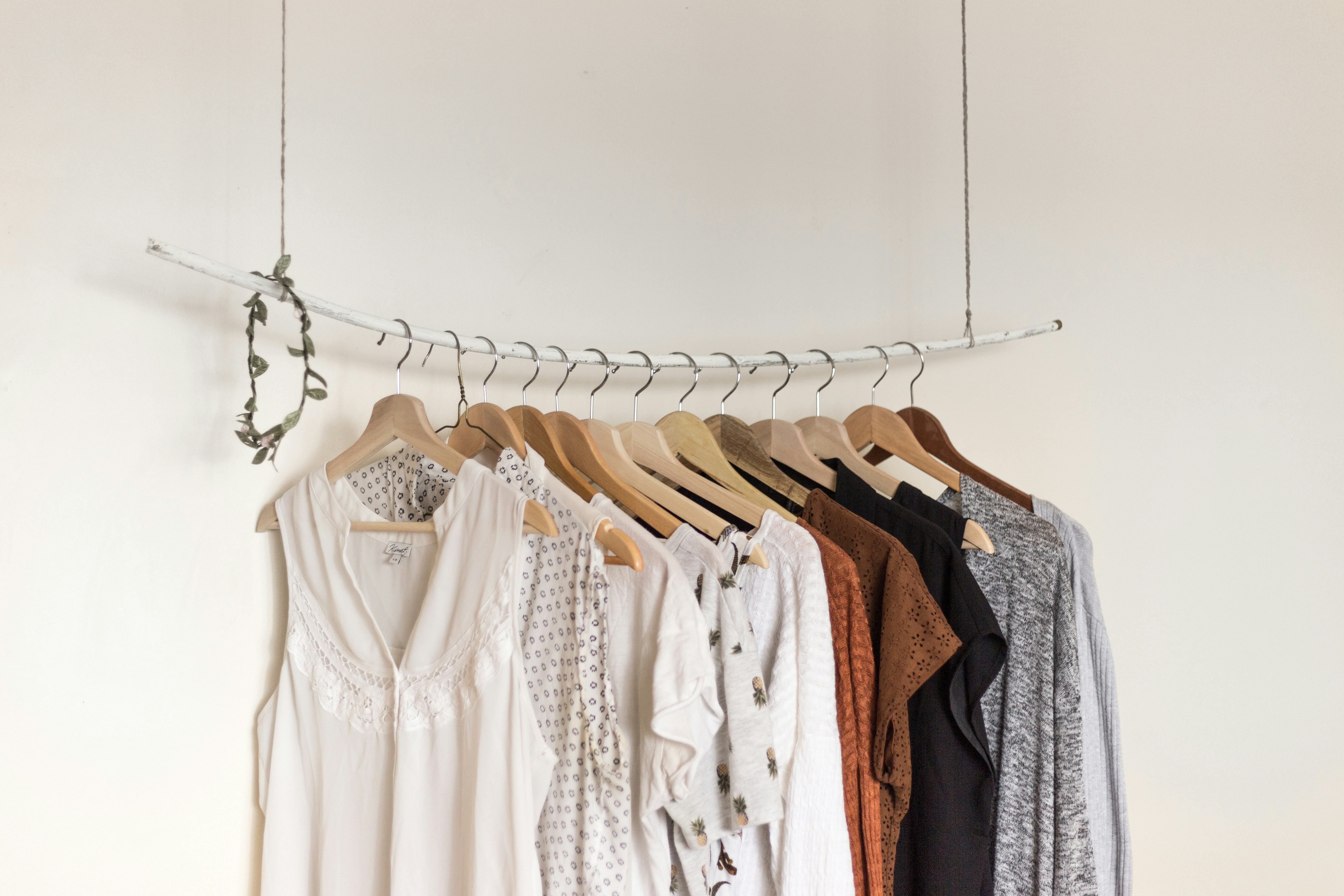
People often ask what this looks like in practice, so here’s a simplified version of my current warm weather capsule.
Tops: four plain t-shirts, two button up blouses, one linen shirt, two tank tops
Bottoms: two pairs of jeans, one pair of tailored trousers, one denim skirt
Outerwear: one light jacket, one blazer
Shoes: white sneakers, brown sandals, one pair of loafers
Extras: two dresses, one cardigan
That’s around nineteen pieces, and I can build close to forty different outfit combinations from it. When the seasons change, I swap a handful of pieces rather than overhauling the entire closet.
Apps and Tools That Actually Help
I was skeptical about wardrobe apps at first, thinking they were unnecessary extra effort. A few genuinely changed how I shop and dress.
Stylebook lets you photograph every piece you own and build outfits digitally before wearing them. It sounds excessive until you’re standing in front of your closet at 7am with zero brainpower left for decisions.
Cladwell suggests daily outfits based on weather and what you already own, which cuts down decision fatigue significantly.
If apps aren’t your thing, even a simple Pinterest board of outfit combinations using pieces you already own works well. I did this for the first few months before switching to Stylebook, and it was genuinely enough to get started.
Common Mistakes People Make With Capsule Wardrobe Essentials
Let’s go through the mistakes I made, plus ones I’ve seen friends run into when trying this for themselves.
Buying a whole new wardrobe at once. This defeats the purpose and gets expensive fast. Build gradually. Replace pieces as they wear out rather than starting from scratch with brand new everything.
Choosing trendy pieces over versatile ones. I bought a bright orange jacket during my first capsule attempt because it was trendy that season. It matched exactly nothing else I owned and sat unworn for months before I finally donated it.
Ignoring fit for the sake of minimalism. Fewer clothes only works if what you keep actually fits well and feels good. Don’t keep something just because it’s neutral colored if it doesn’t fit right.
Forgetting your actual lifestyle. If you work from home in sweats most days, a capsule full of blazers won’t serve you well. Build around how you actually live, not how you imagine you should live.
Skipping the trial period. Give your first version of a capsule at least a month before making major changes. You’ll learn a lot about what you actually reach for versus what looked good on paper.
Adjusting for Seasons Without Starting Over
One thing that confused me early on was how to handle changing weather without buying an entirely new wardrobe every few months.
The trick is building a core set of pieces that work year round, then adding a small seasonal layer on top.
For me, that means keeping jeans, basic tees, and my neutral shoes as constants. Then I swap in warmer layers, boots, and heavier jackets for colder months, while storing the lighter pieces in a bin under my bed.
This way, I’m not rebuilding from scratch twice a year. I’m just rotating maybe eight to ten pieces depending on the season.
Does This Work For Kids and Families Too
A friend of mine applied this same idea to her toddler’s closet after getting overwhelmed by drawers that wouldn’t close. She picked five bottoms, seven tops, one jacket, and two pairs of shoes appropriate for the season.
She told me laundry day became noticeably less chaotic, and picking outfits in the morning stopped turning into a negotiation with a very opinionated three year old.
It’s a reminder that this concept isn’t just for personal style blogs. It works anywhere you’re dealing with too many choices and not enough clarity.
What I’d Tell Someone Just Starting Out
Don’t aim for perfection on your first try. My first capsule wardrobe had a few pieces that didn’t quite work, and that’s fine. You learn what you actually reach for by living with the system for a while, not by planning it flawlessly on paper.
Start smaller than you think you need to. It’s easier to add a piece later than to have wasted money on twenty items you’re not using.
Pay attention to what you’re drawn to during the first few weeks. If you keep avoiding a certain top or those trousers never make it into an outfit, that’s useful information, not a failure.
Final Thoughts on Capsule Wardrobe Essentials
If you want more outfit inspiration once your basics are sorted, Pinterest’s capsule wardrobe boards are a genuinely useful, free way to see how other people combine similar pieces.
My closet still isn’t Pinterest perfect, and honestly, it doesn’t need to be. What changed is that getting dressed stopped being a source of stress every single morning.
I still buy new clothes occasionally, but now I ask myself if something actually fits into what I already own before buying it. That one habit alone has saved me more money and closet space than any other change I’ve made.
If your closet feels more like a source of frustration than something useful, it might be worth trying this out for yourself. Start with just clearing everything out and seeing what you’re really working with. The rest tends to fall into place from there.