
I still remember standing at a leftover chunk of the Berlin Wall, running my hand over the spray paint and concrete, and feeling genuinely strange. This wasn’t a photo in a textbook anymore. It was a real object that had once split a city, and a family, and an entire way of life in half. That’s when it clicked for me why people get so obsessed with historical events that changed the world. They’re not just dates you memorize for a test. They’re the reason things around you look the way they do right now.
I’ve since turned that curiosity into a bit of a habit, visiting old sites, listening to history podcasts on long drives, and reading way too many Wikipedia rabbit holes at midnight. Along the way, I’ve made plenty of mistakes in how I understood certain events, and unlearned a few things I picked up from movies that weren’t exactly accurate.
This article is my attempt to walk you through some of the biggest historical events that changed the world, why they matter more than we usually give them credit for, and how you can actually explore this stuff yourself instead of just reading a dry summary somewhere.
Why Historical Events That Changed the World Still Matter Today
A lot of people think history is just old news with no relevance to daily life. I used to think that too, honestly, until I started noticing how often current events trace back to something that happened decades or even centuries earlier.
Trade routes shaped where major cities exist today. Old political borders drawn after wars still cause tension in certain regions. Even something like the way currencies work traces back to decisions made generations ago.
Understanding these connections doesn’t require a history degree. It just requires curiosity and a willingness to dig a little past the surface level version of events.
The Printing Press and the Spread of Ideas
Before I actually understood this one, I assumed the printing press was just “an old machine that made books faster.” That’s technically true, but it undersells what actually happened.
Before Johannes Gutenberg’s printing press became widespread in the 1450s, books were copied by hand, which meant only wealthy institutions and religious orders had access to written knowledge. Once printing spread across Europe, information became dramatically cheaper and faster to share.
This single shift fueled the Reformation, accelerated scientific progress, and eventually laid groundwork for widespread literacy. If you’ve ever wondered why the modern world values written knowledge so heavily, this is a big part of the answer.
A simple way to understand its impact
Think about how fast information spreads today through social media. The printing press was the original version of that shift, just centuries slower and far more disruptive for its time.
World War II and the Reordering of Global Power
This is one of those historical events that changed the world so completely that most global institutions today, from the United Nations to modern trade agreements, exist partly because of decisions made in its aftermath.
I remember visiting a small museum exhibit years ago that displayed personal letters from soldiers, not textbook summaries, just handwritten letters home. Reading those made the scale of the war feel personal instead of abstract, in a way statistics never could.
The war reshaped borders, ended colonial empires at a faster pace than expected, and set the stage for decades of political tension between global superpowers. Even the technology boom that followed, including early computing research, owes some of its roots to wartime innovation.
Where to learn more responsibly
Sites like the Imperial War Museums offer archived firsthand accounts, which tend to feel far more real than a summarized paragraph in a textbook.
The Fall of the Berlin Wall
This one hits differently because it happened recently enough that people who lived through it are still around to talk about it.
For decades, the wall physically divided East and West Berlin, separating families and symbolizing the broader ideological divide of the Cold War. When it finally came down in 1989, it wasn’t planned as some grand political event. It happened somewhat chaotically, after a miscommunicated announcement led crowds to gather and eventually just start crossing.
I’ve talked to an older coworker who was a teenager in Germany at the time, and she described watching it on television with her family, not fully believing it was real until people she knew personally called to confirm it.
That personal detail stuck with me more than any date ever could.
Step by step: exploring this event yourself
- Watch archived news footage from November 1989, easily searchable on YouTube archives from major networks.
- Visit or research the East Side Gallery, a preserved stretch of the wall now covered in murals.
- Read firsthand accounts from people who lived on either side, since perspectives differed dramatically depending on which side of the wall someone grew up on.
The Moon Landing
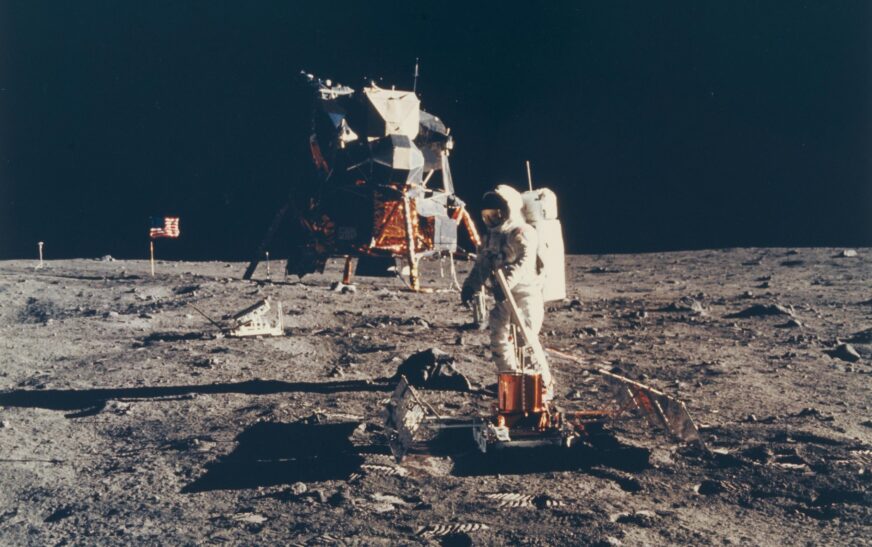
I used to assume this event was mostly about the technology, rockets, and engineering feats. Watching an actual recording of the 1969 landing changed that assumption completely.
What struck me wasn’t just the achievement itself, but how unified the global reaction felt, even briefly, during a decade otherwise defined by division and conflict. For a short moment, people across different countries and political systems watched the same broadcast together.
The event also kickstarted decades of technological advancement that eventually contributed to satellite communication, GPS systems, and even some materials used in everyday products today.
A quick myth to clear up
Despite persistent conspiracy claims, the landing has been independently verified through multiple international sources, including retroreflectors placed on the lunar surface that scientists still use today to measure the Earth-Moon distance using laser reflection.
The Industrial Revolution and the Shift to Modern Life

Out of all the historical events that changed the world, this one gets talked about the least in casual conversation, even though it probably touches your daily routine more than any war or political shift.
Starting in Britain during the late 1700s and spreading across Europe and North America, the Industrial Revolution moved production from small hand workshops to large scale factories. Steam power, mechanized textile production, and eventually railroads reshaped where people lived and how they worked.
I didn’t fully appreciate this shift until I toured an old converted mill building that had been turned into apartments. Standing in a space where workers once operated massive machines for twelve hour shifts made the transition from agricultural life to industrial life feel a lot less abstract.
This period also introduced problems we’re still dealing with today, including early debates over labor rights, pollution, and income inequality between factory owners and workers. If you’ve ever wondered why labor unions exist or why child labor laws became necessary, this era is where that story begins.
A resource worth checking out
The Smithsonian’s industrial history collection has digitized artifacts and photographs from this period, which makes the shift feel a lot more real than reading about it secondhand.
Reading a textbook summary rarely sticks with me. What actually works is treating history like an ongoing investigation rather than a memorization exercise.
Step 1: Start with primary sources when possible
Letters, speeches, and photographs tend to reveal more than summarized paragraphs. Archives like the Library of Congress digital collections offer free access to thousands of original historical documents.
Step 2: Use apps built for this exact purpose
Google Arts & Culture partners with real museums worldwide, letting you explore exhibits related to major historical events directly from your phone. I’ve used it to explore Holocaust memorial exhibits and ancient Egyptian artifacts without leaving my living room.
Step 3: Listen to long form podcasts during downtime
Shows like Dan Carlin’s Hardcore History go deep into specific events over multiple hours, which sounds excessive until you realize how much nuance gets lost in shorter formats.
Step 4: Visit local museums, not just famous ones
Some of the most interesting historical context I’ve gotten came from small regional museums, not the massive famous ones everyone already knows about.
Step 5: Cross check dramatized versions against real sources
Movies and shows often compress timelines or combine characters for storytelling purposes. If something in a film feels too dramatic to be entirely accurate, it probably is. A quick search afterward usually clears up what was fictionalized.
Real Examples of Lesser Known Historical Events That Changed the World

Big events like world wars tend to dominate the conversation, but plenty of smaller, lesser discussed events shaped the modern world just as significantly.
The invention of the internet’s early framework, ARPANET, quietly began in 1969 as a military research project before evolving into the global network we now rely on for basically everything.
The Marshall Plan after World War II rebuilt much of war torn Europe economically, which some historians argue prevented further political instability across the continent during a fragile period.
The Chernobyl disaster in 1986 reshaped global nuclear policy and safety regulations worldwide, influencing how countries approach nuclear energy even decades later.
The invention of penicillin in 1928 by Alexander Fleming quietly transformed medicine, turning previously fatal infections into treatable conditions and extending average life expectancy dramatically within just a few decades.
Each of these gets far less attention than the bigger headline events, yet their ripple effects are still visible today if you know where to look.
Common Mistakes People Make When Learning About History
I’ve made most of these myself, so consider this a friendly warning rather than a lecture.
Relying only on movies or shows for factual accuracy. Entertainment prioritizes drama over precision. Great for engagement, not always reliable for facts.
Ignoring multiple perspectives on the same event. History often looks different depending on which country or group is telling the story. Reading only one nation’s textbook version gives an incomplete picture.
Assuming older sources are automatically less biased. Bias exists across every era, not just modern media. Always consider who wrote a historical account and why.
Skipping context before dates. Memorizing that something happened in a specific year means little without understanding what led up to it.
Treating history as settled rather than still being studied. New archaeological discoveries and declassified documents still reshape our understanding of past events regularly.
Why This Actually Matters Beyond Curiosity
Understanding historical events that changed the world isn’t just an academic exercise. It genuinely helps make sense of current news, political decisions, and even economic patterns happening right now.
When new international conflicts arise, understanding their historical roots often explains tensions that otherwise seem confusing on the surface. When economic policies get debated, historical precedent frequently gets referenced by experts trying to predict outcomes.
This isn’t about becoming a walking encyclopedia. It’s about building enough context to understand the world a little more clearly.
Final Thoughts
Standing at that piece of the Berlin Wall years ago changed how I see history entirely. It stopped being something confined to old books and became something tangible, something that still echoes into daily life whether we notice it or not.
You don’t need a history degree or unlimited free time to start exploring this stuff seriously. A documentary here, a museum visit there, one solid podcast episode during a commute, and slowly the bigger picture starts coming together.
The world we live in today was shaped by countless decisions, conflicts, and turning points most people never think twice about. Once you start noticing those threads, it’s genuinely hard to stop pulling on them.