
I once wore bright white sneakers to a semi-formal dinner because they were the only shoes I could find that weren’t buried at the bottom of my closet. I spent the entire evening tucking my feet under the table, convinced everyone was staring at them. Nobody probably even noticed, but I noticed, and that was enough to make me finally get serious about building a shoe collection that actually worked.

For years my shoe situation was chaos. A pile by the door, half of them uncomfortable, most of them bought on impulse because they looked cute in a store window. I owned eleven pairs of shoes and somehow still felt like I had nothing to wear on any given morning.
That dinner was the wake-up call. Since then I’ve slowly rebuilt my shoe collection around a much smaller number of pairs that actually work with almost everything I own. I want to walk you through what I learned, including the expensive mistakes along the way.
Why Most People Struggle With Shoe Choices
Shoes are usually an afterthought. People spend time picking out a top, jeans, maybe a jacket, and then grab whatever shoes are closest to the door on their way out.
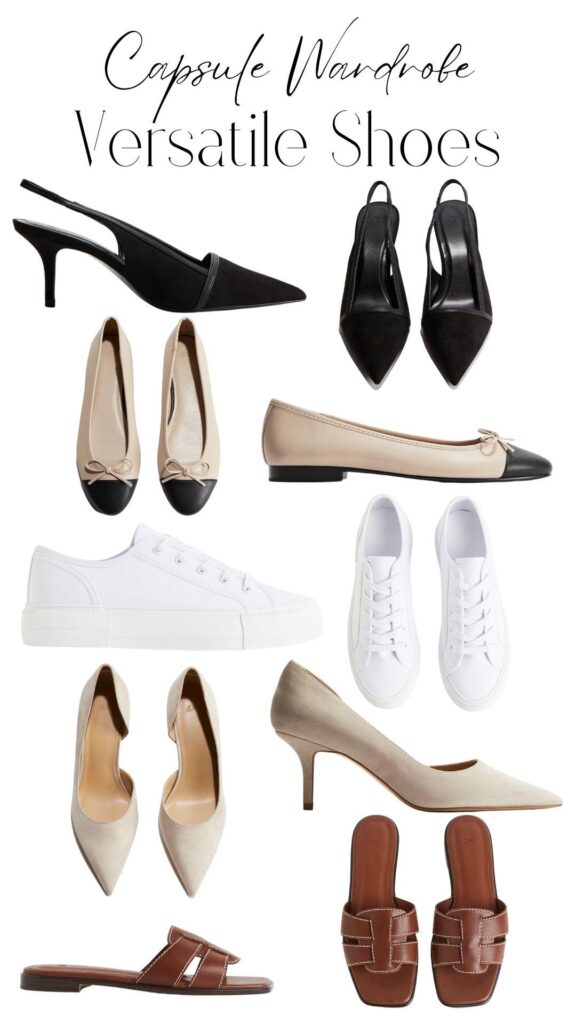
I did this for years. The problem is shoes can make or break an entire outfit. Wear the wrong pair and even a great outfit looks off. Wear the right pair and even a basic jeans-and-tee combo looks intentional.
Once I understood that shoes were basically the finishing punctuation on an outfit, everything else started making more sense.
The Core Shoe Types Every Closet Needs
White Sneakers
These became my most-worn shoes almost by accident. I bought a pair of Adidas Stan Smiths on a whim a few years back, and they ended up working with nearly everything, jeans, casual dresses, even some skirts.
White sneakers read as clean and put-together without trying too hard. The trick I learned is keeping them actually white. A magic eraser sponge works surprisingly well for scuffs, and I avoid wearing them on muddy or rainy days since white leather shows every mark.
Simple Black Flats
I resisted buying black flats for a long time because I thought they looked boring. Turns out boring is exactly what makes them useful.
Black flats work under work pants, with dresses, with skirts, basically anywhere you need something polished but not fussy. I went through a cheap pair that fell apart within two months before finally investing in a better quality pair, and the difference in comfort was honestly night and day.
A Neutral Ankle Boot
Living somewhere with actual seasons taught me the value of a good ankle boot. Mine is a plain tan leather pair, no buckles or flashy hardware, and it works with jeans, leggings, dresses, and even shorts during early fall.
The mistake I made initially was buying a boot with a very specific, trendy shape that only worked with skinny jeans. Once wide-leg pants came back into style, that boot became almost useless. Lesson learned: pick classic shapes over trendy ones for anything you want to wear for years.
One Pair of Heels That Actually Fit
I used to buy heels based purely on how they looked in the store, then suffer through entire events limping because they didn’t fit right. Terrible decision, repeated more times than I’d like to admit.
Now I own one pair of mid-height black heels that I actually tried on and walked around in for at least ten minutes before buying. Comfort matters more than height. A two-inch heel you can actually walk in beats a four-inch heel you spend the whole night avoiding.
Casual Sandals for Warmer Months
For spring and summer, a simple pair of leather sandals rounds things out nicely. Mine are a basic tan pair with minimal hardware, and they work with sundresses, denim shorts, and even rolled-up jeans.
Step-by-Step: Building Your Own Shoe Capsule
Here’s how I’d approach this if I were starting from scratch, based on what actually worked for me.
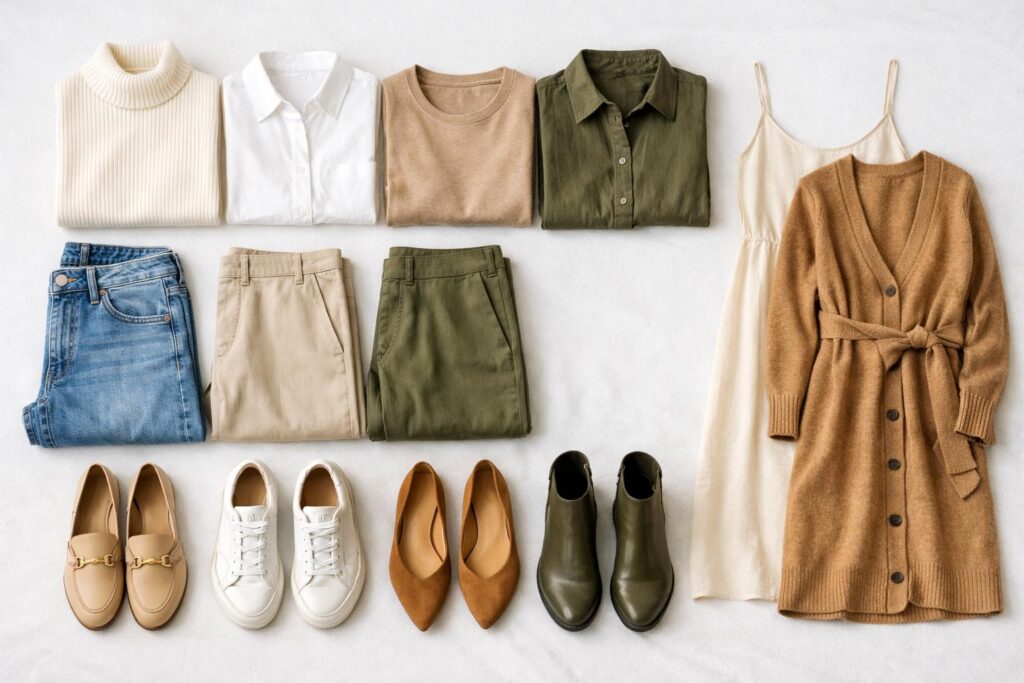
Step one: Take inventory of what you own
Pull every pair of shoes out of your closet. Try each one on and check if it’s still comfortable, in good condition, and something you’d actually reach for.
Step two: Notice the gaps
I realized I owned six pairs of dressy heels I rarely wore and zero reliable everyday sneakers. Your gaps will probably look different, but the exercise is the same.
Step three: Prioritize versatility over variety
Instead of buying five new trendy pairs, pick one or two versatile styles that will genuinely work across multiple outfits. I use the Pureple or ShopStyle apps sometimes just to browse and compare options before committing to a purchase.
Step four: Invest in quality for your most-worn pairs
The shoes you’ll wear three or four times a week deserve a better budget than the ones you’ll wear twice a year. I learned this after replacing a cheap pair of everyday flats three separate times in one year, which ended up costing more than one good pair would have.
Step five: Care for what you already own
A simple shoe brush, some leather conditioner, and rotating your shoes instead of wearing the same pair daily can significantly extend how long they last. My boots have lasted almost four years now, mostly because I stopped wearing them every single day.
Matching Shoes to Specific Outfits
Jeans and a T-Shirt
White sneakers are almost foolproof here. On dressier casual days, I’ll swap in the ankle boots instead, especially during cooler months.

Work Outfits
Black flats or low block heels handle most office situations without sacrificing comfort during a full workday. I keep a backup pair of flats in my desk drawer for days when my feet just need a break from anything with height.
Dresses for Events
This depends heavily on the dress length and formality. For a casual sundress, sandals work well. For something dressier, my go-to mid-height heels handle almost every situation without much overthinking required.
Athleisure or Errand Days
Honestly, sneakers again. I know that sounds repetitive, but a solid pair of white sneakers genuinely earns its keep across more outfit categories than almost anything else I own.
Real Example: How I Simplified My Shoe Rack
Two years ago my shoe rack held nineteen pairs. Today it holds eight, and I actually wear all eight regularly.
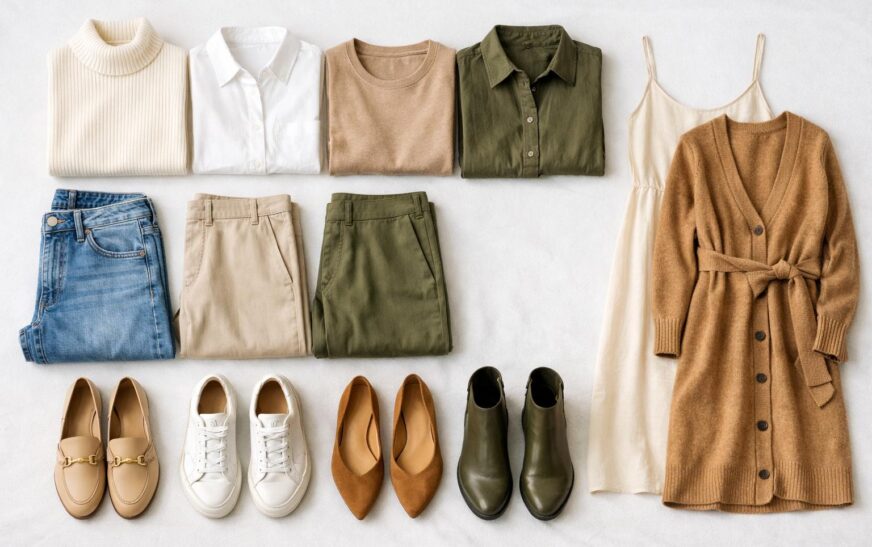
White sneakers, black flats, tan ankle boots, black mid-height heels, tan sandals, a pair of running shoes for actual workouts, slip-on loafers for slightly dressier casual days, and one pair of winter boots for genuinely cold weather.
Getting dressed became noticeably faster once I wasn’t sorting through shoes I never actually wore. Everything in that smaller collection works with multiple outfits, which means less decision fatigue every single morning.
Common Mistakes to Avoid
Buying shoes purely because they’re trendy. I’ve done this more times than I want to admit, only to have the shoes sit unworn once the trend faded. Classic styles age much better in your closet.
Ignoring comfort for the sake of style. A shoe that hurts after twenty minutes isn’t actually a good shoe, no matter how great it looks. I learned this lesson the hard way at more than one wedding.
Skipping the “will this match multiple outfits” test. Before buying, I now mentally run through at least three different outfits I already own that the shoe could pair with. If I can’t think of three, I usually skip the purchase.
Neglecting shoe care. Letting leather dry out or skipping basic cleaning shortens the life of even expensive shoes significantly. A little maintenance goes a long way.
Owning too many similar pairs. I once owned four nearly identical black flats because I kept forgetting what I already had. Now I photograph my shoe collection on my phone before shopping, just to avoid duplicate purchases.
A Few Tools Worth Mentioning
The Stylebook app, which I also use for outfit planning, lets you photograph and catalog your shoes alongside your clothing for easier outfit matching.
A basic shoe tree or boot shaper keeps shoes holding their shape between wears, which matters more than people realize for leather shoes specifically.
Poshmark and ThredUp are solid options if you want quality brands like Cole Haan or Naturalizer without paying full retail price.
A suede brush and leather conditioner, both inexpensive, have probably added years of life to my nicer shoes.
Final Thoughts
Building a shoe collection that actually works isn’t about owning dozens of pairs or chasing every new trend that shows up on social media. It’s about finding a handful of reliable options that pair easily with the clothes you already wear most.
Start small. Look at what’s currently sitting in your closet, notice which pairs you reach for again and again, and pay attention to the ones gathering dust. That pattern will tell you more about what you actually need than any shopping guide ever could.
Comfortable, versatile shoes make getting dressed easier every single day, and honestly, that convenience matters a lot more than most of us give it credit for.