
I fell into this obsession by accident. A few years back I got stuck in an airport for six hours. I killed time watching a documentary about a jungle expedition. By the time I boarded my delayed flight, I’d already bought two books on lost civilizations.
What hooked me wasn’t the treasure or the mystery movie vibe. It was realizing something simple. Actual archaeologists, right now, in 2026, are still out there searching. They’re hacking through jungle, diving into lakes, and staring at satellite scans. They’re trying to find cities that history basically erased.
This isn’t old news from a hundred years ago. It’s happening currently. Some of the biggest finds have come in just the last year.
So I started following this stuff seriously. Expedition updates became regular reading. I watched interviews with the researchers themselves, and even messaged a couple of archaeology grad students online to ask dumb questions. Here’s what I learned about the cities still missing, the ones recently found, and why this hunt is harder than it looks in the movies.
Why Cities Actually Get Lost in the First Place
Before diving into specific places, it helps to understand something. How does an entire city just disappear from human memory? It sounds almost impossible in an era of satellites and GPS. But it happens more than you’d think.
Sometimes it’s environmental. Rivers shift course. Deserts expand. Coastlines erode. A city built next to a reliable water source becomes uninhabitable once that source moves. People abandon it within a generation or two. Once nobody’s left to maintain records, the location fades from memory, even if the story survives in legend.
Sometimes it’s disaster. Earthquakes, floods, and volcanic eruptions can bury or submerge a settlement overnight. Other times it’s slower. Tectonic subsidence can pull a coastal city underwater over centuries.
And sometimes it’s conquest and abandonment. Invaders raze a city. Survivors scatter. Within a few decades, jungle or desert reclaims everything. Vegetation in tropical regions can swallow stone structures within a hundred years. That’s part of why so many lost cities keep turning up in places like Central America and Southeast Asia.
The Tools Archaeologists Actually Use Now
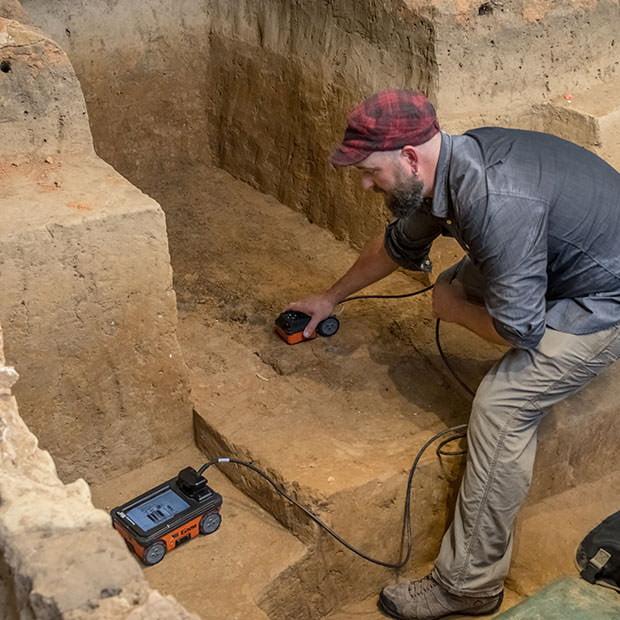
This part genuinely surprised me. I assumed modern archaeology still meant guys with shovels and grid squares. That’s still part of it. But the technology driving new discoveries has changed dramatically.
LiDAR Is the Real Game Changer
LiDAR stands for Light Detection and Ranging. It works by firing laser pulses from an aircraft down through jungle canopy. The lasers bounce off the ground beneath the foliage. Researchers use the return data to build a digital map of what’s hiding underneath, without cutting down a single tree.
This technology is responsible for a huge chunk of recent Maya discoveries. Researchers fly over the Yucatán Peninsula or the Guatemalan lowlands. They run the LiDAR scans and look for unnatural geometric patterns. Those patterns suggest human construction rather than random terrain. Once they spot a promising signature, they send a ground team to confirm it in person.
That’s the exact process behind one of the coolest finds I’ve followed recently. A Mexican-Slovenian research team led by archaeologist Ivan Šprajc ran LiDAR surveys across the Yucatán. They spent 2023 and 2024 checking sites in person. Most led nowhere. Then in 2026, they finally hit something real. A completely intact, unlooted Maya city sat buried deep in the Calakmul Biosphere Reserve. They named it Minanbé, meaning “there is no path” in Yucatec Maya.
Underwater Surveys and Sonar Mapping
For cities lost to rising water or earthquakes, archaeologists rely on sonar mapping instead of aerial scans. Sonar equipment reveals structural shapes on the lakebed or seafloor. Divers follow up to confirm and document what’s actually down there.
This approach recently led to a major discovery beneath Lake Issyk-Kul in Kyrgyzstan. An international team found the remains of a medieval city there. It included a cemetery, public buildings, and streets, sitting under just a few feet of water. Researchers believe a powerful earthquake in the early 1400s pushed the settlement under the lake. That basically froze it in time.
Old-Fashioned Fieldwork Still Matters
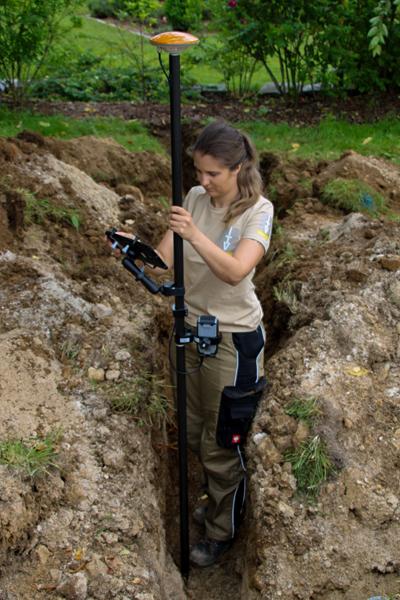
Despite all the tech, nothing replaces someone physically walking the ground. The Minanbé team had to clear roughly three miles of dense jungle just to reach the site. Then they hiked several more miles on foot, since no roads came anywhere close. Technology tells you where to look. Getting there still takes actual sweat and machetes.
Famous Lost Cities Still Missing (As of Right Now)
Here’s where things get genuinely fascinating. Some of history’s most significant cities remain completely unlocated, despite decades of searching.
Thinis, Egypt’s Forgotten First Capital
Thinis is believed to be one of Egypt’s earliest capitals. It’s connected to the unification of Upper and Lower Egypt around 3000 BC. It shows up repeatedly in ancient texts as a political and religious center. It’s associated with the earliest pharaohs of the First and Second Dynasties.
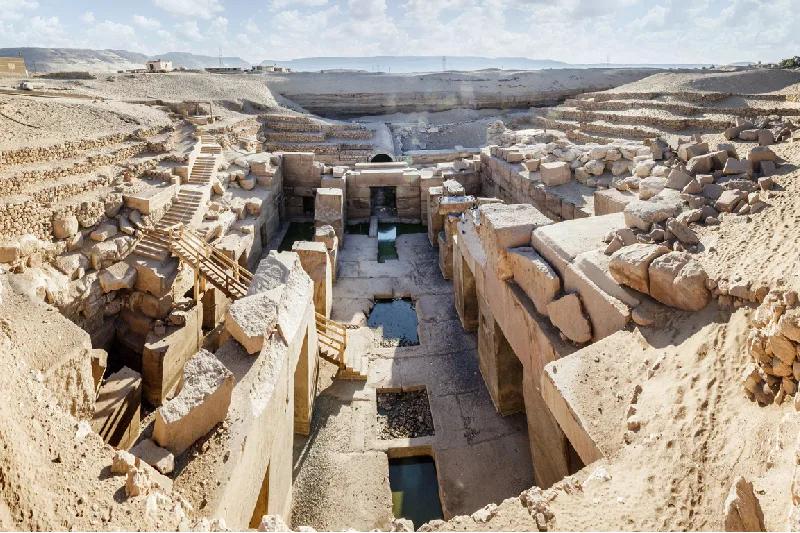
Archaeologists think it was located somewhere near Abydos, a site already famous for its royal tombs. But the actual city itself has never been physically confirmed. Museum curators point to climate shifts and desertification as likely factors in its abandonment. Modern farming in the area also makes finding remaining traces harder today.
Itjtawy, Egypt’s Middle Kingdom Capital
Itjtawy served as the seat of power during Egypt’s Middle Kingdom. That was roughly between 1985 and 1650 BC. Historians have a rough idea of where it stood. It was likely near the Nile and adjacent waterways, based on ancient texts like the Victory Stela of Piye.
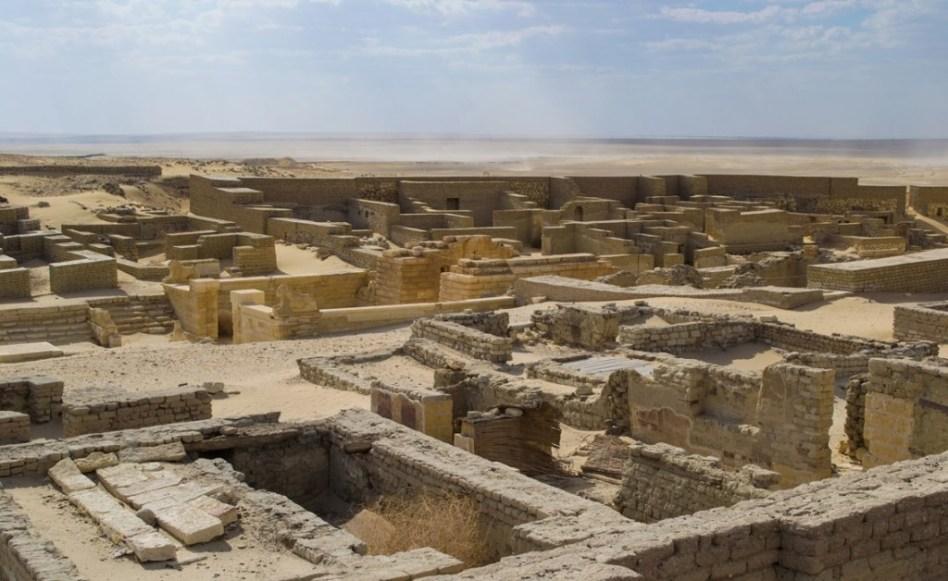
The problem is flooding. Thousands of years of it have buried the area under layer after layer of silt, sand, and clay. Egyptian archaeology professor Josef Wegner has noted the city was likely situated east of Lisht. But centuries of buildup mean entire sections could be permanently gone.
Paititi, the Inca Legend Deep in the Amazon
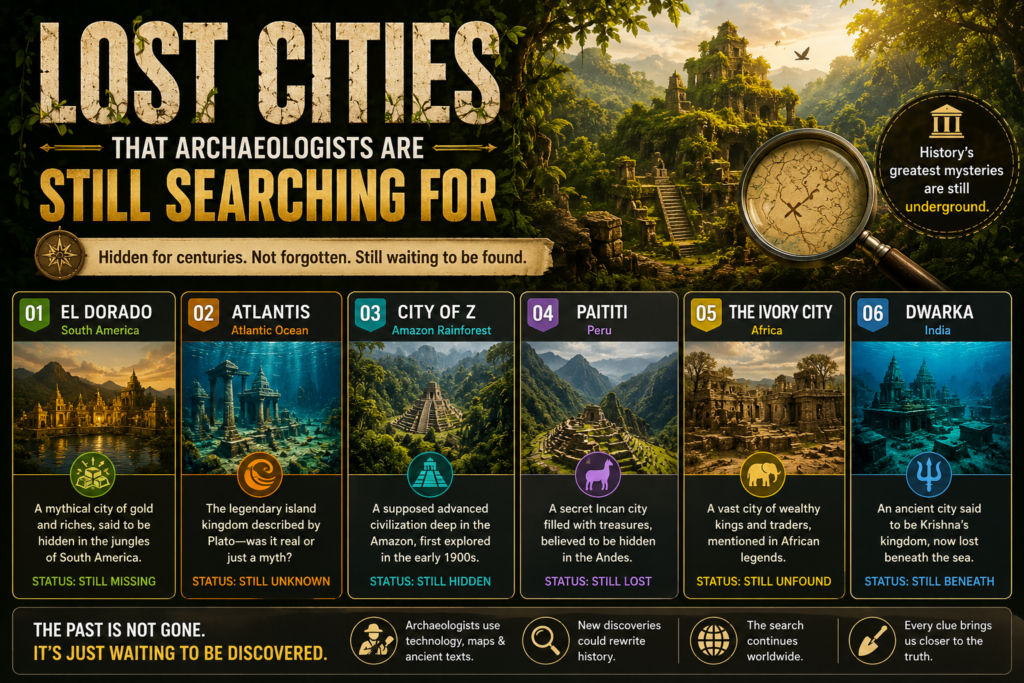
This one’s less confirmed historically and more legendary. It’s one of the most searched-for lost cities in the world. Paititi is described in old accounts as a refuge. Inca nobility supposedly fled there with their treasures after the Spanish conquest. It’s hidden somewhere deep in the Amazon basin, spanning Peru, Bolivia, and Brazil.
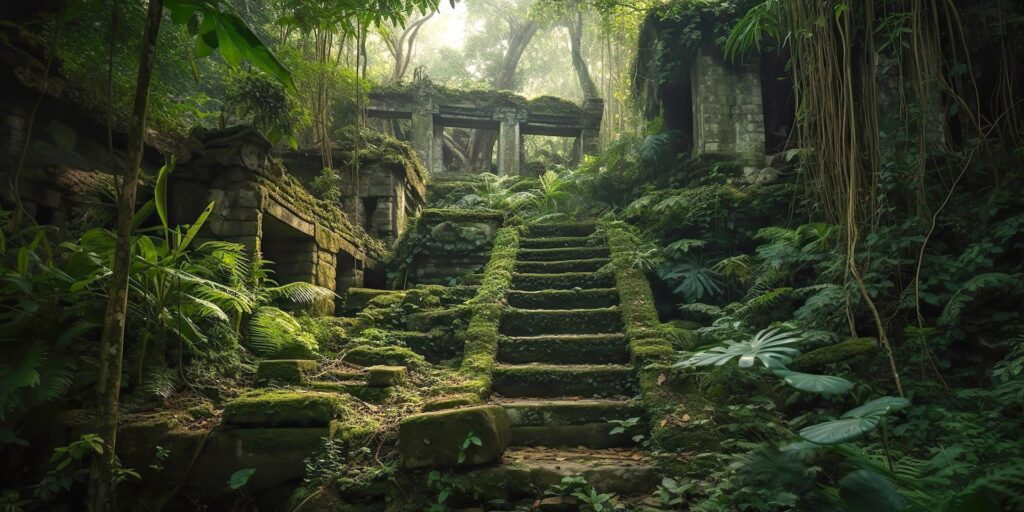
Expeditions have gone looking for decades. Some have found ruins, but none have definitively confirmed a match. The dense rainforest makes both LiDAR surveys and ground expeditions incredibly difficult here. That’s part of why this one remains genuinely unsolved.
Lost Cities Recently Found (Proof This Stuff Actually Works)
It’s worth highlighting recent successes too. They show how close some searches get before finally paying off.
Minanbé, The Untouched Maya City
I mentioned this one earlier, but it deserves more detail. Announced by Mexico’s National Institute of Anthropology and History in June 2026, Minanbé sat completely undisturbed for over a thousand years. Pyramids, palace complexes, and carved stone monuments were still intact.
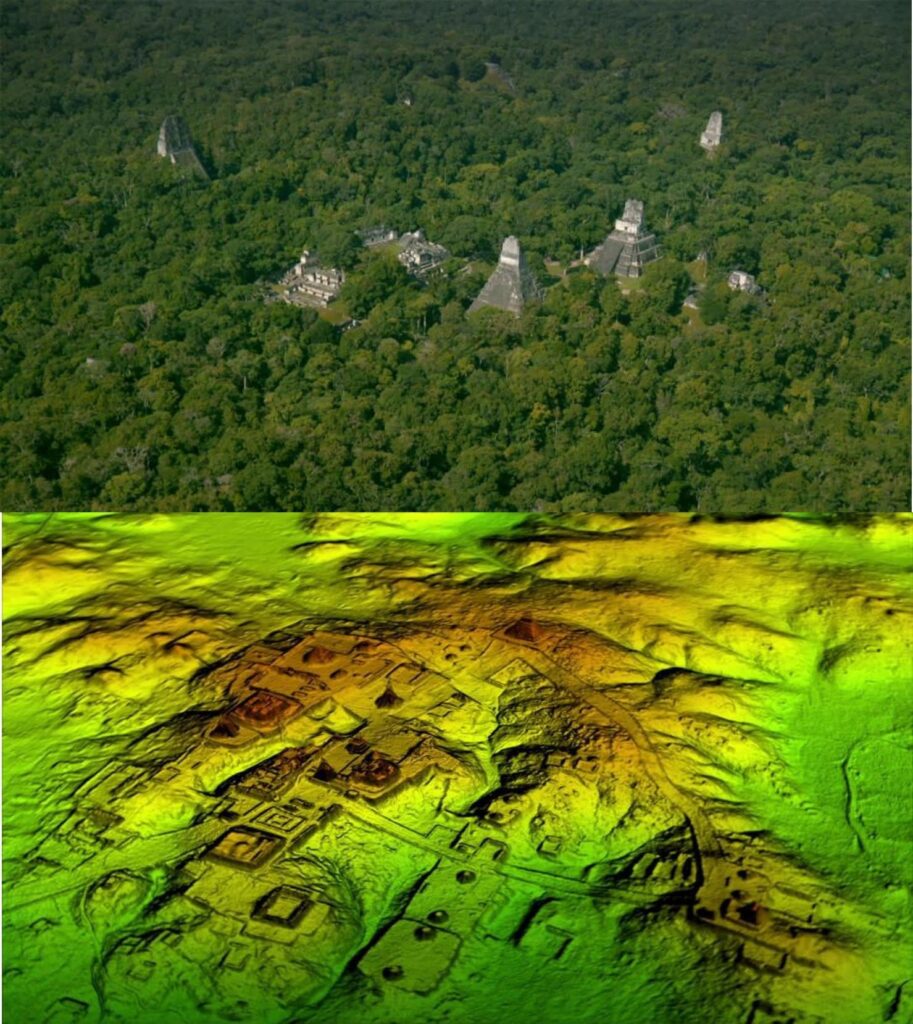
What makes this discovery especially valuable is a series of stelae. They were found along a causeway connecting different sections of the city. Epigrapher Octavio Esparza Olguín decoded elements of the eroded text despite heavy weathering. The inscriptions apparently place Minanbé right before the broader Maya collapse of the ninth and tenth centuries. That timing could offer real clues about what triggered the abandonment of major Maya centers across the region.
The Underwater City at Issyk-Kul
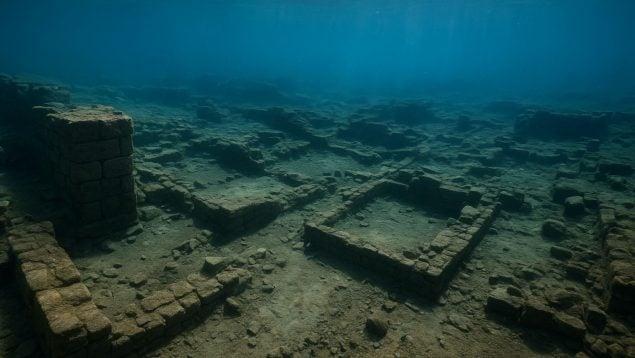
Beyond the medieval settlement mentioned earlier, ongoing survey work at Lake Issyk-Kul has kept uncovering more of the submerged Toru-Aygyr complex. This strengthens the case that it’s a genuine lost city, not just scattered ruins. Divers have mapped walls, collapsed structures, and wooden beams. Underwater drones film every section for later analysis back on land.
Thonis-Heracleion, Egypt’s Sunken Port
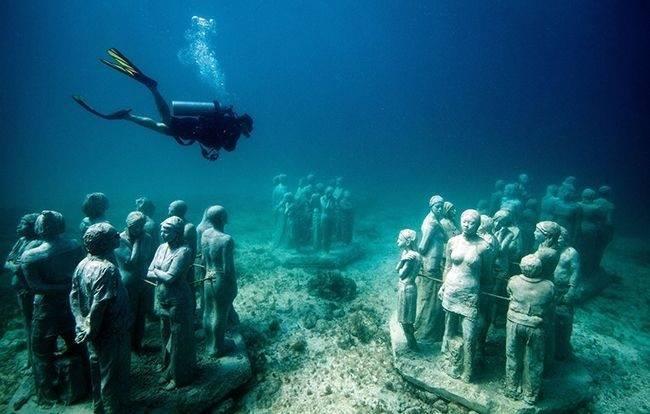
This ancient Egyptian port city sits submerged in Abu Qir Bay near Alexandria. It’s been under active excavation for years. Recent mission phases, led by researcher Franck Goddio’s team, have documented entirely new zones. They’ve identified a Greek sanctuary near the site’s Amun temple complex. Imported bronze and ceramic objects there suggest active trade between Greek merchants and local Egyptians.
Step-by-Step: How a Lost City Search Actually Unfolds
If you’re curious how this process works from start to finish, here’s the general sequence, based on what I’ve picked up following these projects.
Step one involves gathering historical clues. Old texts, maps, oral traditions, and previous partial discoveries all get compiled. This narrows down a general search region.
Step two is remote sensing. Depending on terrain, this means LiDAR flyovers for jungle regions, satellite imaging for desert areas, or sonar surveys for underwater targets.
Step three is identifying anomalies. Researchers look for unnatural geometric shapes or density differences. These suggest human-made structures rather than natural terrain.
Step four is ground verification, often the hardest part. Teams physically travel to promising sites. This can mean weeks of jungle trekking or repeated dives, just to confirm whether the data matches a real settlement.
Step five is excavation and documentation. This can take years or even decades. Every artifact gets cataloged. Structures get carefully mapped. Researchers slowly piece together who lived there and why they left.
Common Misconceptions People Have About Lost Cities
Following this topic closely, I’ve noticed some misunderstandings that come up constantly. I believed a few of these myself early on.
Assuming every search ends in dramatic treasure is probably the biggest one. Most discoveries involve pottery shards, building foundations, and eroded inscriptions. They don’t involve glittering gold rooms like in adventure movies. The real value is historical and scientific, not financial.
Believing satellite imagery alone can confirm a discovery is another common mistake. Remote sensing narrows down where to look. Ground verification is always required. Plenty of promising LiDAR signatures turn out to be natural rock formations once a team actually arrives.
Thinking lost cities only hide in remote jungles ignores something important. Plenty of sunken and underwater sites remain undiscovered too. Coastal cities lost to earthquakes or gradual land subsidence need completely different equipment and expertise.
Assuming a general region quickly leads to an exact location is also wrong. Researchers can spend decades searching a broad area without confirming a match. Paititi in the Amazon is a perfect example of this.
How You Can Actually Follow This Stuff Yourself
If any of this has you curious, here’s how I personally stay updated. A lot of this research doesn’t always make mainstream news right away.
Following organizations like INAH, the Archaeological Survey of India, and the Institute of Nautical Archaeology on social media helps a lot. You get updates straight from the source, often before major outlets pick up the story.
Sites like HeritageDaily and Ancient Origins specialize in archaeology news specifically. They tend to cover discoveries in more depth than general news sites running a quick summary.
YouTube channels run by actual archaeologists, rather than general history creators, often include raw expedition footage. They also give more technical explanations of how discoveries actually happened.
Academic journals like Science and Antiquity publish peer-reviewed findings. These tend to be denser reading, and they usually come out well after initial news coverage.
A Mistake I Made Early On (And What It Taught Me)
When I first got into this, I assumed lost cities were mostly a jungle thing. I pictured overgrown temples and vine-covered pyramids, nothing else. That assumption cost me months of missing half the story.
Deserts hide cities just as effectively as jungles do. Sand shifts constantly, burying entire settlements under dunes that can move over decades. Egypt alone has multiple capitals still unaccounted for, buried under sediment rather than vegetation.
I also assumed older meant harder to find, which isn’t always true either. Some genuinely ancient sites get discovered relatively fast once the right technology gets pointed at the right spot. Meanwhile, more recent lost settlements sometimes stay hidden longer, especially underwater ones where access and funding are harder to secure.
The lesson here is simple. Don’t assume you know where to look based on movies or general assumptions. The actual pattern of where things get lost, and where they eventually turn up, rarely matches the Hollywood version.
Final Thoughts
What keeps pulling me back into this topic isn’t really the mystery itself. It’s watching real people spend years, sometimes decades, chasing a location. They work off nothing but old texts, satellite blips, and stubborn persistence.
Most leads go nowhere. The team behind Minanbé checked dozens of sites before finally finding one that wasn’t looted or destroyed. That ratio of failure to success is honestly what makes the eventual discoveries feel earned rather than lucky.
Somewhere out there, Thinis and Paititi are still sitting exactly where they’ve always been. They’re waiting for someone with the right mix of technology, funding, and stubbornness to finally show up.
So much has been found just in the past year. An intact Maya city. A medieval settlement beneath a Kyrgyz lake. At this point, it feels less like a question of if these remaining cities get found. It feels more like a question of when.