

Two summers ago I stood in a hotel lobby in Bali watching staff replace the little plastic water bottles in every single room, all 214 of them, every single day. Full bottles being swapped for identical full bottles because that’s just how the place operated.
I’d flown halfway around the world partly to see coral reefs that were already bleaching, and here I was contributing to a mountain of plastic without even trying. That moment bothered me more than I expected it to.
So I started paying closer attention. Not in a preachy, guilt-trip way, just genuinely curious about how much of my travel habits I could adjust without turning every trip into a miserable exercise in self-denial.
What I found is that sustainable travel tips don’t have to mean sleeping in a tent and giving up flying forever. Most of the meaningful changes are small, practical, and honestly make trips feel better organized too.
Why This Actually Matters Beyond Feeling Good
Tourism accounts for a real chunk of global carbon emissions, and popular destinations are increasingly straining under the weight of visitor numbers they were never built to handle.
I saw this firsthand in Venice, where a friend who’d lived there for years described watching her grocery store get replaced by another souvenir shop selling glass trinkets. The city she grew up in was slowly turning into a theme park version of itself.
None of this means travel is inherently bad. It means the way most of us have been traveling for the past couple decades needs a few adjustments, and those adjustments are far more achievable than people assume.
Sustainable Travel Tips That Actually Made a Difference for Me

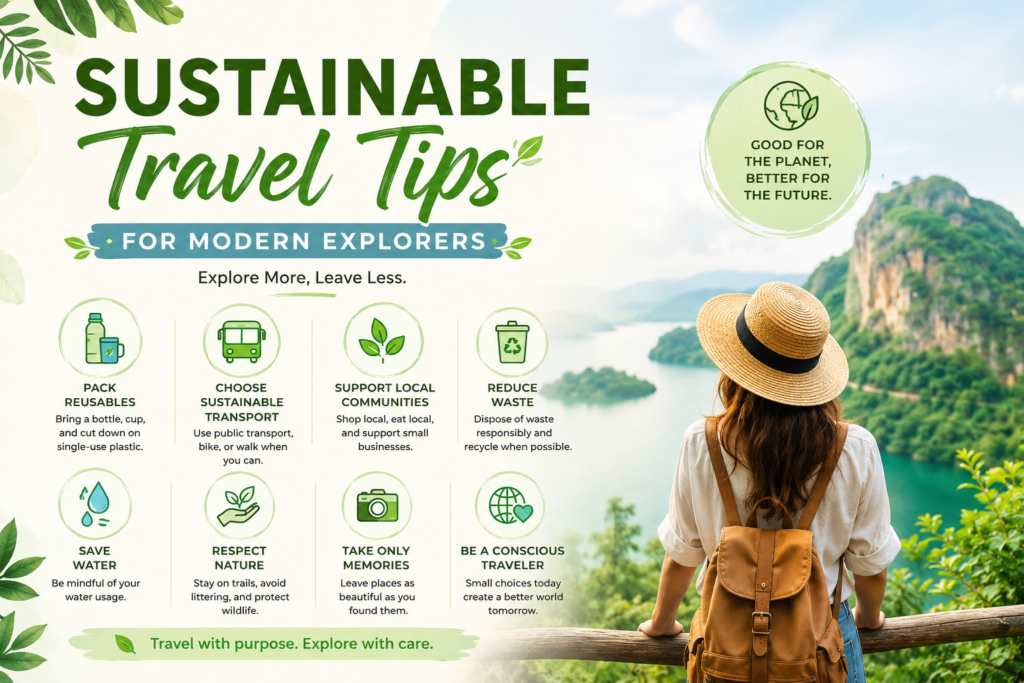
1. Packing Reusable Gear That Actually Gets Used
I used to buy a reusable water bottle before every trip, then leave it sitting in my bag the entire time because filling it felt inconvenient compared to just grabbing bottled water.
What changed things was downloading the app Refill, which shows nearby locations offering free water refills in dozens of countries. Suddenly refilling wasn’t a hassle, it was just the easiest option available.
I also started carrying a collapsible silicone container from a brand called Stasher instead of accepting single-use containers from street food vendors. It sounds minor, but across a two week trip that alone avoided close to twenty pieces of disposable plastic.
How to start:
- Buy one solid reusable water bottle and actually keep it in your daypack, not your suitcase
- Download an app like Refill or Tap to locate free water stations
- Carry a small foldable bag for shopping or leftovers instead of accepting plastic ones
- Pack a bamboo or metal cutlery set for street food and takeaway meals
2. Choosing Accommodations That Aren’t Just Greenwashing

This one tripped me up early on. I booked a resort in Costa Rica that plastered “eco-friendly” across its entire website, complete with green leaf logos everywhere.
Turns out their sustainability efforts amounted to reused towel cards and not much else. Meanwhile a smaller guesthouse down the road ran entirely on solar power, composted food waste, and employed almost exclusively local staff, without a single green leaf logo anywhere on their site.
Since then I check for actual certifications rather than trusting marketing language. Green Key and EarthCheck are two certification bodies that require real verification, unlike vague self-applied labels.
How to start:
- Search Booking.com’s Travel Sustainable filter when browsing accommodations
- Look for genuine third-party certifications like Green Key or EarthCheck
- Read a few recent reviews specifically mentioning sustainability practices
- Consider smaller, locally owned guesthouses over large international chains when possible
3. Rethinking How You Actually Get There
Flights are the elephant in the room for anyone serious about sustainable travel tips, and I’m not going to pretend otherwise. I still fly for long-haul trips because realistically, some destinations aren’t reachable another way.
What I have changed is choosing direct flights whenever the price difference is reasonable. Takeoffs and landings burn disproportionately more fuel than cruising, so a flight with two layovers can have a noticeably larger footprint than a direct route covering the same distance.
For trips under roughly six hours away, I’ve started genuinely considering trains. A journey from London to Amsterdam by train takes about four hours and skips the airport hassle entirely, something I didn’t fully appreciate until I tried it.
How to start:
- Compare direct versus connecting flights using Google Flights, which now shows estimated emissions per route
- Consider trains for regional trips using apps like Rail Europe or Trainline
- Pack lighter, since aircraft fuel consumption scales with weight
- Stay longer in fewer places rather than cramming multiple short flights into one trip
4. Supporting Local Economies Instead of Bypassing Them
On an early trip to Thailand, I booked everything through a single all-inclusive tour operator based overseas. Meals, transport, activities, all bundled together and paid before I even landed.
Looking back, very little of that money actually reached the local community I was visiting. A guide I met later, working independently, explained that large foreign-owned operators often keep the majority of profits offshore.
My next trip to Vietnam looked completely different. I booked a homestay directly through a family-run operation, ate at local restaurants instead of hotel buffets, and hired an independent guide I found through a local tourism cooperative. The experience felt richer too, not just more ethical.
How to start:
- Book at least some meals at family-run restaurants instead of hotel restaurants exclusively
- Look for homestays or locally owned guesthouses through platforms like Fairbnb
- Hire independent local guides where possible instead of large foreign tour companies
- Buy souvenirs directly from artisans rather than mass-produced shop versions
5. Being Realistic About Offsetting
Carbon offsetting gets criticized a lot, and some of that criticism is fair. I bought offsets for a flight years ago without researching the program at all, and later learned it funded a project that had already been cancelled.
That experience taught me to be more selective rather than giving up on offsetting entirely. Programs verified by Gold Standard or Verra actually track and audit their projects, unlike some cheaper alternatives that exist mostly on paper.
Offsetting isn’t a free pass to ignore your footprint. Think of it as a last step after reducing what you can, not a substitute for reducing anything at all.
How to start:
- Choose offset programs verified by Gold Standard or Verra specifically
- Treat offsetting as a supplement to reducing emissions, not a replacement
- Check whether your airline offers a verified offset option at checkout
- Research the specific project your money funds before purchasing
6. Respecting Wildlife and Natural Sites Properly

I’ll admit to a mistake here that still makes me cringe. Years ago I paid for an elephant riding experience in Thailand before understanding how those animals are typically trained and treated. I had no idea at the time, and that’s exactly the problem.
Since learning more, I’ve sought out genuine sanctuaries instead, places like Elephant Nature Park that focus on observation and rehabilitation rather than rides and performances. The difference in animal behavior alone was noticeable, calmer, more natural, less visibly stressed.
The same logic applies to coral reefs, hiking trails, and any fragile natural environment. A little research beforehand usually reveals whether an experience is genuinely respectful or just marketed to look that way.
How to start:
- Research any wildlife experience thoroughly before booking, checking for red flags like riding or performing animals
- Stick to marked trails when hiking to avoid damaging fragile ecosystems
- Use reef-safe sunscreen, checking ingredients for oxybenzone and octinoxate specifically
- Support organizations verified by groups like World Animal Protection
Common Mistakes I’ve Made Along the Way
Overpacking sustainable gear I never actually used cost me both money and suitcase space early on. A reusable bottle you don’t refill isn’t helping anyone.
I also assumed pricier automatically meant more ethical, which isn’t always true. Some budget guesthouses run far more sustainably than luxury resorts with bigger marketing budgets for green branding.
Finally, I used to treat sustainability as all-or-nothing, which led to burnout and guilt rather than actual change. Perfection isn’t the goal here. Consistent small improvements add up over dozens of trips in a way that one perfect trip never could.
Putting This Into Practice on Your Next Trip
Start with just one or two changes rather than overhauling your entire travel style overnight. Trying to fix everything at once usually leads to giving up on all of it within a few months.
Pick a reusable item you’ll genuinely use, research your accommodation before booking instead of trusting marketing copy, and consider one train journey instead of a short flight if your route allows it.
If you’re planning a longer trip and want to build income while you travel, our guide on remote business opportunities you can start today covers several paths that work well for people who want flexibility to travel more sustainably and slowly.
Final Thoughts
Standing in that Bali hotel lobby watching perfectly good water bottles get thrown out taught me more than any documentary ever did. Sometimes the problem isn’t some abstract global crisis, it’s the small default habits nobody questions.
Sustainable travel tips work best when they fit into how you actually like to travel, not when they’re forced on top of it. Pick one change from this list, try it on your next trip, and see how naturally the rest start to follow.
The goal was never to travel less. It was to travel in a way that leaves the places I love a little less worse off than I found them.