

Three years ago I was sitting in my car during lunch break, scrolling through my banking app, watching my paycheck disappear into rent and groceries before it even landed properly. My job was fine. Not terrible, not exciting, just fine. But “fine” doesn’t build savings, and it definitely doesn’t build a life you’re excited about.
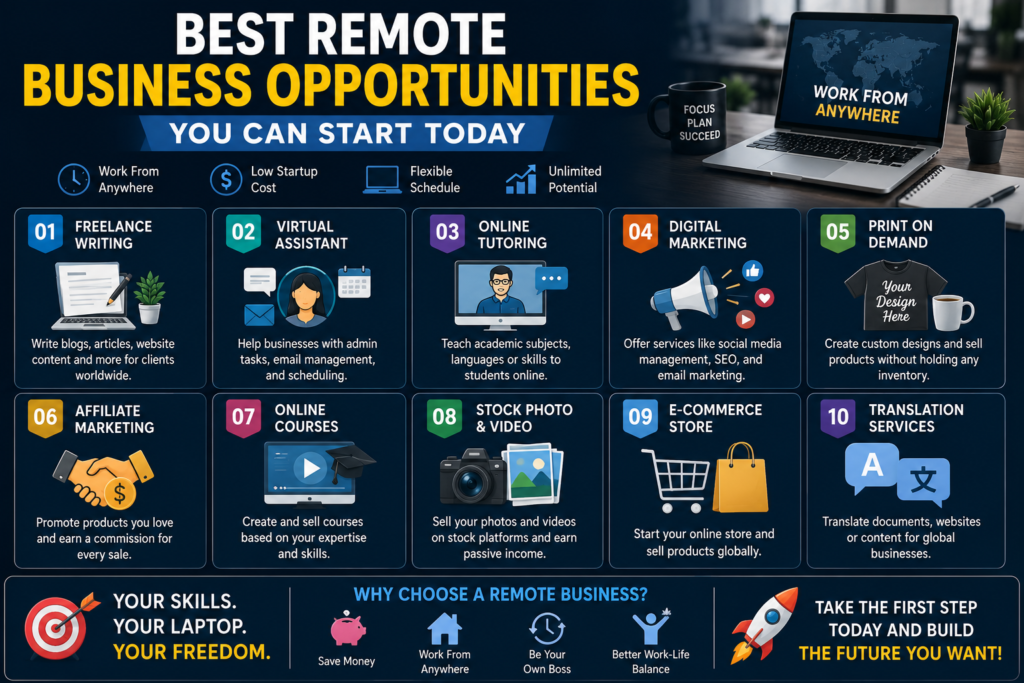
That afternoon I typed “how to make money from home” into Google, half expecting to find nothing but scams and get-rich-quick nonsense. And honestly, there was plenty of that. But buried under it were a few legitimate remote business opportunities that regular people were actually using to build income outside their day jobs.
I want to walk you through what actually worked, what wasted my time, and how you can realistically start one of these remote business opportunities this week without quitting your job or draining your savings account.
Why Remote Business Opportunities Look Different Now
A decade ago, starting a business from home usually meant either freelancing on sites like oDesk (now Upwork) or setting up an eBay store. The options were limited and the competition was often brutal.
Today the landscape has shifted quite a bit. Cloud tools, AI writing assistants, no-code website builders, and global payment platforms like Stripe and Wise have removed most of the technical barriers. You don’t need coding skills, a business degree, or a big bank account to get started.
What you do need is patience, a willingness to learn from mistakes, and realistic expectations. Nobody replaces their salary in thirty days, no matter what a YouTube thumbnail promises you.

Remote Business Opportunities I’ve Actually Tried (and What Happened)
1. Freelance Writing and Content Creation

This was my starting point, mostly because it required zero upfront investment. I signed up on Upwork and Fiverr the same week, built a bare-bones portfolio using three sample articles I wrote for free, and started applying to gigs.
My first month brought in exactly one client, paying eleven dollars for a five hundred word blog post. Not exactly life-changing money. But that client left a review, which led to a second client, then a third.
By month six I was writing for two small marketing agencies on a recurring basis, earning around six hundred dollars a month on the side. It wasn’t glamorous, but it was consistent, and it taught me how client relationships actually work.
How to start:
- Pick a niche you already understand, such as fitness, finance, tech, or parenting
- Write two or three sample pieces before applying anywhere
- Set your first few prices low enough to attract reviews, then raise them gradually
- Use Grammarly or Hemingway Editor to polish your writing before submitting
2. Virtual Assistant Work
A friend of mine, Sarah, pivoted from a stressful retail management job into virtual assistant work during a slow economic stretch. She started by managing email inboxes and scheduling for a single small business owner she found through a Facebook group.
Within a year she was managing calendars, social media posting, and basic bookkeeping for four different clients, working roughly twenty five hours a week from her kitchen table. Her income actually matched her old retail salary, minus the commute and the difficult customers.
The appeal here is low barrier to entry. Most business owners just want someone reliable who can handle repetitive tasks without constant supervision.
How to start:
- List your existing skills honestly: scheduling, email management, social media, customer service, data entry
- Search Facebook groups for small business owners in your area or niche
- Offer a trial week at a reduced rate to prove your reliability
- Use tools like Trello, Asana, or Notion to stay organized across multiple clients
3. Print on Demand and Dropshipping
I’ll be honest about this one because most articles online oversell it. I launched a print on demand shop through Printful connected to a Shopify store, selling coffee mugs with sarcastic office humor designs.
My first month I made four sales. Total profit after fees: about eighteen dollars. Not the retirement plan I was hoping for.
What changed things was narrowing my niche dramatically. Instead of generic funny mugs, I focused specifically on gifts for veterinary technicians, a small but passionate audience. Sales picked up, and within four months I was clearing around three hundred dollars monthly in pure profit, with zero inventory sitting in my garage.
The lesson here matters more than the numbers: broad audiences ignore you, but specific communities notice you.
How to start:
- Choose a narrow, specific audience rather than a broad general market
- Use Printful, Printify, or Gooten to handle production and shipping
- Build your store on Shopify or Etsy depending on your target buyer
- Test designs with small paid ad budgets, around five to ten dollars a day, before scaling anything
4. Online Tutoring and Coaching
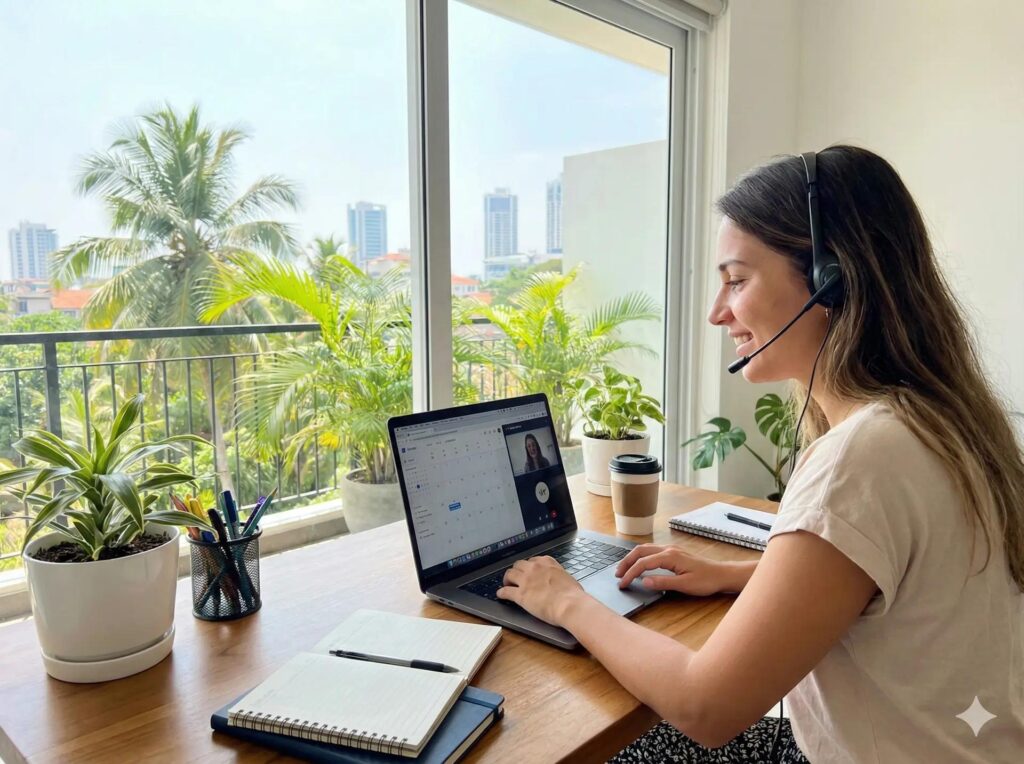
My cousin taught high school math for six years before COVID pushed everything online. Rather than returning to a classroom afterward, she started tutoring students individually through platforms like Wyzant and Preply.
She now earns more per hour tutoring privately than she did teaching full time, and she sets her own schedule around her kids. Some weeks she works fifteen hours, other weeks thirty, depending on what her family needs.
If you have expertise in something people are willing to pay to learn, whether that’s academic subjects, a musical instrument, a language, or even a specific software program, this path can work surprisingly fast.
How to start:
- Choose a subject where you have demonstrable results, not just interest
- Create a simple profile on Preply, Wyzant, or Superprof
- Offer your first few sessions at a discount to build initial reviews
- Use Zoom or Google Meet along with a basic whiteboard app like Jamboard for lessons
5. Selling Digital Products
This one surprised me the most. A woman I follow on Instagram, a former elementary school teacher, started selling printable lesson planning templates on Etsy. Nothing fancy, just well organized PDFs she’d already been using in her own classroom.
Two years later, that Etsy shop replaced her teaching income entirely. Digital products have an advantage that physical products don’t: you make something once, and it can sell indefinitely without you doing anything further.
How to start:
- Identify a problem you’ve already solved for yourself that others likely face too
- Design your product using free tools like Canva
- List it on Etsy, Gumroad, or your own simple website
- Promote through Pinterest, which drives surprisingly strong traffic for digital downloads
6. Affiliate Marketing Through a Niche Blog or YouTube Channel

I started a small blog reviewing budget camping gear because that’s genuinely what I spend my weekends doing. For the first eight months, I made nothing. Zero dollars. I nearly quit twice.
Then Google started ranking a few of my posts, and Amazon Associates commissions started trickling in. Small amounts at first, five dollars here, twelve dollars there. By month fourteen, it had grown into roughly four hundred dollars a month in passive income from content I’d written over a year earlier.
Affiliate marketing rewards patience more than any other option on this list. It’s slow, often frustrating, but the income becomes genuinely passive once the content is ranking.
How to start:
- Pick a topic you actually use and understand, not just one that seems profitable
- Start a WordPress site using Bluehost or SiteGround for hosting
- Join the Amazon Associates program or niche-specific affiliate programs
- Focus on genuinely helpful, detailed content instead of thin review pages
Mistakes That Cost Me Time and Money
Looking back, a few missteps stand out clearly.
I spent nearly two hundred dollars on a “guaranteed traffic” course that taught nothing I couldn’t have learned from free YouTube tutorials. Be skeptical of anyone promising guaranteed results for a fixed price.
I also tried juggling four different business ideas simultaneously in my first three months. Splitting focus like that meant nothing got enough attention to actually gain momentum. Pick one path, give it real effort for at least ninety days, and only then decide whether to pivot.
Finally, I underpriced my freelance writing services for far too long out of fear that clients would say no. Confidence in pricing comes with experience, but starting too low trains clients to expect bargain rates forever.
Setting Realistic Expectations
None of these paths made me rich in a month. Most took between four and twelve months before generating meaningful, consistent income. That timeline isn’t a failure, it’s just how building something real actually works.
Treat your first ninety days as a learning period rather than a payday. Track what’s working, drop what isn’t, and reinvest small profits back into tools or skills that help you improve.
Tools Worth Knowing About
A few platforms came up repeatedly across every path I tried, and they’re worth bookmarking regardless of which direction you choose.
Google Workspace keeps documents, spreadsheets, and email organized across clients. Canva handles design work even if you’ve never opened a design program before. Wise makes receiving international client payments far cheaper than traditional bank transfers. And Notion works well as a central hub for tracking clients, deadlines, and income across multiple projects at once.
If you’re weighing this against a more traditional side gig, our guide on the best side hustles to start today breaks down a few options that overlap nicely with the remote business opportunities listed above.
Final Thoughts
Starting a remote business isn’t about finding the one perfect idea that magically works overnight. It’s about picking something that fits your actual skills and schedule, testing it honestly for a few months, and adjusting based on what you learn along the way.
My camping blog took over a year to earn real money. Sarah’s virtual assistant work took about four months. Your timeline will look different from both of ours, and that’s completely normal.
Pick one option from this list today. Not next month, not “when things settle down.” Spend an hour setting up a profile, writing a sample piece, or listing your first product. Small, unglamorous first steps are exactly how every remote business opportunity on this list actually started.