

I bought my first stock at 24 because a coworker mentioned it during lunch, and I had absolutely no idea what I was doing. I put in three hundred dollars, watched the price bounce around for a week, panicked when it dropped, and sold at a small loss. Classic beginner move.
That mistake actually taught me more than any finance book I’ve read since. It forced me to slow down and actually learn what investing means instead of just clicking buttons on an app because someone told me to.
If you’re standing at that same starting line right now, feeling like everyone else already understands some secret language you missed the lesson on, I promise you don’t need to know everything before you begin. You just need a few solid habits and enough patience to let them work.
Here’s what I wish someone had told me before I opened my first brokerage account.
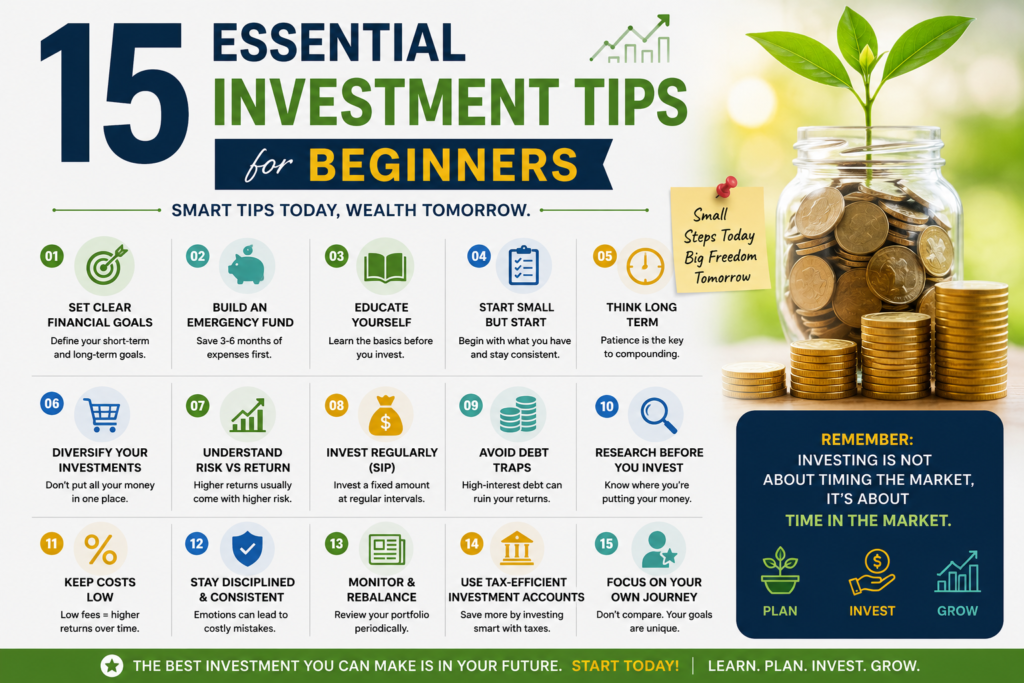
1. Start Before You Feel Ready

Waiting for the perfect moment to start investing is a trap. I told myself I’d start once I had a “real” emergency fund, then once I paid off a credit card, then once I understood the stock market better.
Years passed. Money that could have grown sat in a checking account earning basically nothing.
Starting small while you’re still learning beats waiting for some imaginary point of readiness that never actually arrives. Even fifty dollars a month in a simple index fund puts time on your side, and time matters more than almost anything else in investing.
2. Build a Small Cushion First

Before I put money into the market, I got burned once by needing cash fast and having to sell investments at a bad time to cover a car repair.
Now I keep a small emergency cushion in a separate savings account, something like three to six months of basic expenses, before investing anything extra.
This isn’t about being overly cautious. It’s about not being forced to sell your investments during a downturn just because life threw an unexpected bill at you.
Simple way to build this
- Open a separate high-yield savings account, apps like Ally or Marcus work well for this.
- Set an automatic transfer, even twenty dollars a week counts.
- Leave that account alone unless it’s a genuine emergency.
3. Understand What You’re Actually Buying

My first stock purchase happened because of a lunchtime conversation, not because I understood the company’s business model, revenue, or industry position.
Now I follow a simple rule. If I can’t explain what a company actually does and how it makes money in two sentences, I don’t buy it.
This single habit alone kept me out of several trendy investments that later crashed hard.
4. Index Funds Are Not Boring, They’re Smart
Everyone wants to talk about picking the next big stock, but the boring stuff is usually what actually works long term.
An index fund is basically a basket that holds pieces of hundreds or thousands of companies at once, so instead of betting everything on one business, you’re spreading your money across the entire market.
Funds like an S&P 500 index fund, offered through platforms like Vanguard, Fidelity, or Schwab, have historically grown steadily over long periods, even though they dip during rough years.
I moved most of my portfolio into index funds after realizing I was spending hours researching individual stocks and still not beating what a simple fund would have done anyway.
5. Diversification Isn’t Optional
I once put almost forty percent of my portfolio into a single tech stock because I was convinced it would keep climbing. It didn’t. The stock dropped nearly sixty percent within a year, and that mistake alone erased months of gains from everything else.
Diversification means spreading your money across different companies, industries, and asset types so one bad outcome doesn’t sink your entire portfolio.
A simple diversification approach
Mix a broad stock index fund with a bond fund, and adjust the ratio based on your age and comfort with risk. Younger investors typically lean more toward stocks since they have more time to recover from dips.
6. Time in the Market Beats Timing the Market

I tried timing the market exactly once, waiting for prices to drop before buying. Prices kept rising while I waited on the sidelines, and by the time I finally bought in, I had missed weeks of growth.
Nobody consistently predicts short-term market movements, not professional fund managers, not finance YouTubers, not that one guy from your office who “called” a stock rally.
Consistent investing over years matters far more than trying to catch the perfect entry point.
7. Automate Your Investing
The months I invested manually were inconsistent. Some months I invested extra, other months I forgot entirely or talked myself out of it.
Setting up automatic transfers into a brokerage account changed everything. The money moves before I even think about spending it.
Setting this up
- Choose a brokerage, Fidelity, Vanguard, and Schwab all support this easily.
- Pick an amount you won’t miss from your paycheck.
- Set the transfer to happen automatically, ideally right after payday.
- Choose your investment, often a broad index fund, and set automatic purchases too.
8. Understand Fees Before You Commit
I ignored fees completely at first, not realizing that a fund charging 1% annually versus one charging 0.05% makes a massive difference over several decades.
Those numbers look tiny on paper but compound into thousands of dollars lost over a long investing timeline.
Quick fee check
Look up the expense ratio of any fund before buying. Index funds usually charge extremely low fees, sometimes under 0.10%, while actively managed funds often charge significantly more without necessarily performing better.
9. Retirement Accounts Come With Serious Advantages
I avoided opening a Roth IRA for years because retirement felt impossibly far away and honestly kind of boring to think about.
Once I finally opened one through Fidelity, I realized how much tax advantage I had been missing out on. Money grows inside these accounts without the same tax burden as a regular brokerage account, depending on the account type.
Getting started
A Roth IRA lets your investments grow completely tax-free as long as you follow withdrawal rules, while a Traditional IRA gives you a tax break upfront instead. If your employer offers a 401k match, contribute at least enough to get the full match first, since that’s essentially free money.
10. Emotions Are Your Biggest Risk
I sold a solid long-term holding once purely out of panic during a market dip, only to watch it recover fully within a few months.
The math of investing is actually pretty simple. The emotional part is where most people, myself included, mess things up.
Markets go down sometimes. That’s normal, expected, and historically temporary more often than not.
11. Don’t Chase Trends
I watched friends jump into cryptocurrency and meme stocks purely because prices were spiking and everyone online seemed to be making easy money.
Some got lucky. Most didn’t, including a friend who put a significant chunk of his savings into a coin that eventually became worthless.
Chasing whatever is currently hot usually means buying near the top, right before enthusiasm fades and prices fall back down.
12. Rebalance Occasionally
After a strong year for stocks, my portfolio shifted to nearly 90% stocks and only 10% bonds, way outside my original target allocation.
Rebalancing means periodically adjusting your investments back toward your original target mix, selling a bit of what’s grown too large and adding to what’s shrunk relatively smaller.
Simple rebalancing approach
Check your allocation once or twice a year. Many brokerage apps, including Fidelity and Vanguard, now offer automatic rebalancing tools that handle this for you.
13. Keep Investing Separate From Speculating
I keep a small separate account specifically for riskier bets I’m curious about, individual stocks, occasional crypto, whatever catches my interest.
This account holds money I could genuinely afford to lose completely without affecting my actual financial goals.
Separating “serious long-term investing” from “playing around with extra cash” keeps my core retirement plan protected from impulsive decisions.
14. Taxes Matter More Than You’d Think
I sold an investment early once without realizing short-term capital gains get taxed at a higher rate than long-term gains held over a year.
That mistake cost me more in taxes than it needed to, purely from not understanding the difference.
Basic tax awareness
Holding investments for over a year before selling typically qualifies for lower long-term capital gains tax rates. This isn’t a reason to avoid selling when needed, just something worth factoring into your decisions.
15. Keep Learning, But Don’t Overcomplicate Things
I went through a phase of reading everything I could find about investing, options trading, technical analysis, complicated strategies that honestly overwhelmed more than helped.
Eventually I realized the boring, simple approach, consistent investing into diversified index funds, held long term, outperformed most of my complicated attempts anyway.
Learning is valuable, but don’t let complexity become an excuse to avoid starting or to constantly second-guess a solid, simple plan.
Mistakes I Made Along the Way
I concentrated too much money in a single stock because I was overconfident about one company’s future.
I ignored fees for years, not realizing how much they were quietly eating into my returns.
None of these mistakes were catastrophic on their own, but together they slowed my progress more than I initially realized.
A Few Things to Keep in Mind Before You Start
Every investor’s situation looks different depending on age, income, goals, and comfort with risk, so what works well for me might need adjusting for your circumstances.
This article shares personal experience and general information, not personalized financial advice. Consider speaking with a licensed financial advisor for guidance specific to your situation, especially for decisions involving taxes, retirement planning, or larger sums of money.
Markets carry risk, and past performance never guarantees future results. Anyone promising guaranteed returns is a red flag worth walking away from immediately.
Final Thoughts
Investing felt intimidating to me for years, mostly because I assumed everyone else understood some complicated system I hadn’t figured out yet. Turns out most successful long-term investors follow surprisingly simple habits, start early, diversify, keep costs low, and avoid emotional decisions during market swings.
You don’t need to master everything before opening your first account. Start with what feels manageable, automate what you can, and give your money time to grow.
The version of me who panicked and sold that first stock at a loss had no idea how much a little patience would eventually pay off.