

Last spring my manager pulled me into a meeting that had no agenda listed, which is never a good sign. Turns out our entire department was being restructured, and two roles that had existed for over a decade were simply gone. Not moved to another team. Gone.
One of the people affected, a guy named Marcus who’d been doing manual data reporting for nine years, sat next to me afterward looking genuinely shaken. He wasn’t bad at his job. He just hadn’t updated what his job actually required in a very long time.
That afternoon sent me down a rabbit hole researching future-proof business skills, partly out of fear and partly out of curiosity. What I found wasn’t as scary as I expected, but it did confirm something uncomfortable: the skills that kept people employed in 2015 are not the same ones that will matter by 2030.
I’ve spent the past year deliberately building a handful of these skills myself, made plenty of mistakes along the way, and I want to share what actually moved the needle versus what turned out to be a waste of time.
Why the Skills Conversation Feels Different This Time
People have been saying “adapt or get left behind” for decades, so it’s fair to be a little skeptical of another article claiming this moment is special.
Here’s what actually convinced me it is. Automation used to replace repetitive physical tasks. Now it’s creeping into analysis, writing, scheduling, and decision support, work that used to require a human brain sitting at a desk for hours.
That doesn’t mean jobs are disappearing wholesale. It means the value of certain tasks is dropping fast, while the value of a smaller set of human-specific skills is climbing just as fast. Understanding that shift is the whole game.
The Skills I’ve Actually Seen Pay Off

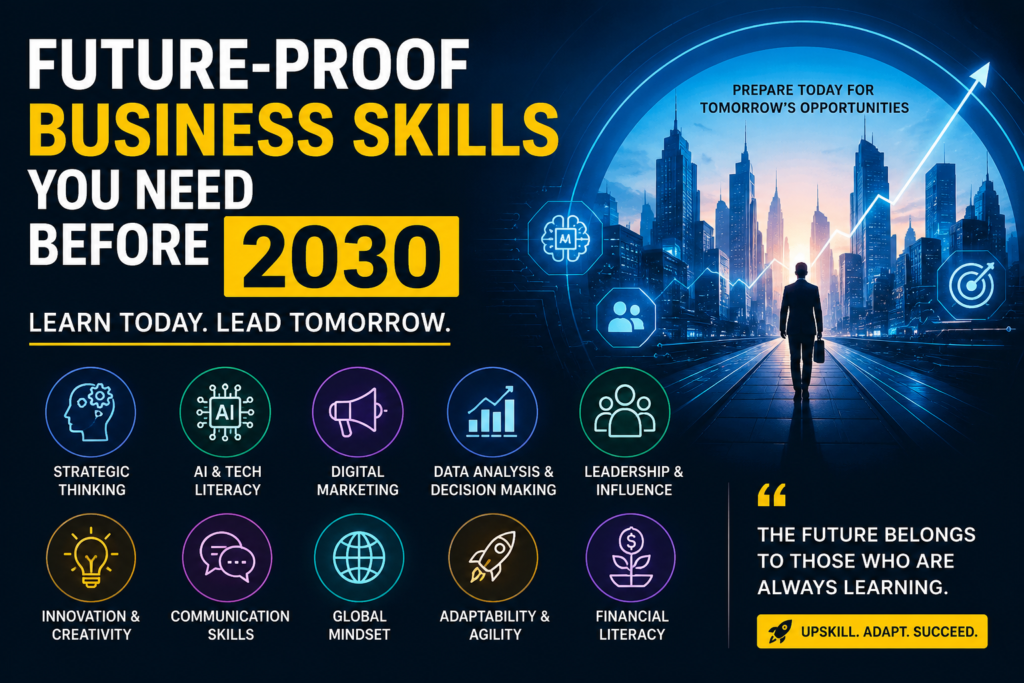
1. Working Comfortably Alongside AI Tools
I resisted this one longer than I should have. For months I treated tools like ChatGPT and Claude as gimmicks, something junior employees played with instead of doing real work.
Then a colleague showed me how she used AI to draft first versions of client proposals, cutting a two hour task down to twenty minutes of editing. I felt genuinely behind.
So I started small. I used ChatGPT to summarize long meeting transcripts, then Claude to help restructure messy reports into something readable. Within a few weeks, tasks that used to eat my afternoon were taking a fraction of the time.
The mistake I made early on was trusting the output too much. I once submitted an AI-generated summary without checking it carefully, and it had quietly misrepresented a client’s budget figure. Lesson learned fast: these tools speed up your work, they don’t replace your judgment.
How to build this skill:
- Pick one repetitive task you do weekly and try automating part of it with an AI tool
- Learn basic prompt writing, being specific about tone, format, and context
- Always review AI output against the original source before sending it anywhere
- Explore tools beyond chatbots too, like Zapier for workflow automation
2. Data Literacy Without Needing to Become a Data Scientist
I used to assume “data skills” meant learning Python and complicated statistics. That intimidated me enough to avoid the topic entirely for years.
What actually mattered turned out to be much simpler: reading a spreadsheet critically, spotting when a chart is misleading, and asking the right questions about numbers before making a decision based on them.
My turning point came from a free Google Analytics course I took mostly out of boredom one weekend. Suddenly, marketing meetings that used to go over my head made complete sense. I started noticing when colleagues were drawing conclusions the data didn’t actually support.
How to build this skill:
- Take a free introductory course through Coursera or LinkedIn Learning on data analysis basics
- Practice with Google Sheets or Excel using real datasets from your own job
- Learn to ask “compared to what” whenever someone presents a single number as a win
- Get comfortable with simple visualization tools like Google Data Studio
3. Adaptability Through Constant Small Learning
This one sounds vague, so let me make it concrete. Adaptability isn’t a personality trait you either have or don’t. It’s a habit built through repeated small exposures to new tools and ideas.
I started blocking thirty minutes every Friday afternoon specifically for learning something unrelated to my current tasks. Sometimes that meant a YouTube tutorial, sometimes an industry newsletter, sometimes just messing around with a new app.
Six months in, I noticed something interesting. When my company switched project management software from Trello to Asana, most of my team panicked and complained for weeks. I picked it up in about two days, mostly because I’d built a habit of poking around unfamiliar tools without dreading it.
How to build this skill:
- Schedule a fixed weekly time slot dedicated purely to learning something new
- Rotate between formats: videos, articles, hands-on practice, podcasts
- Follow two or three newsletters in your industry, such as Morning Brew or The Hustle
- Treat unfamiliar software as a puzzle to solve rather than an obstacle
4. Clear Written Communication
Remote and hybrid work made this skill far more valuable than it used to be. When you’re not standing next to someone’s desk, your Slack messages and emails are doing the heavy lifting of your professional reputation.
I noticed a real shift in how people responded to me once I started writing shorter, clearer messages instead of long rambling paragraphs. Requests got answered faster. Misunderstandings dropped noticeably.
One mistake I made constantly was burying the actual ask at the bottom of a long message. People would read the first two sentences, get distracted, and miss what I actually needed. Now I lead with the request, then add context after.
How to build this skill:
- Put your main point or request in the first sentence, not the last
- Use bullet points for anything with more than two steps
- Read your message once before sending and cut anything that doesn’t add value
- Study emails or messages from people whose communication style you admire
5. Basic Financial and Business Fluency
I spent years assuming budgets and profit margins were someone else’s problem to worry about. That mindset quietly capped how far I could grow, because I couldn’t speak confidently in conversations about business impact.
A turning point came when my manager asked me to justify a project’s cost against its expected return, and I genuinely didn’t know how to frame that answer. Embarrassing moment, useful wake-up call.
I picked up a beginner-friendly book on business finance and started paying attention to quarterly earnings summaries for companies I actually used as a customer. Within a couple months, conversations about budgets stopped feeling like a foreign language.
How to build this skill:
- Learn to read a basic profit and loss statement, even at a surface level
- Follow quarterly earnings calls or summaries for a company you’re genuinely interested in
- Practice framing your own work in terms of cost, time saved, or revenue impact
- Use free resources like Investopedia to decode unfamiliar financial terms as they come up
6. Emotional Intelligence and People Skills
This sounds like a soft skill, and it is, but it’s becoming a genuine competitive advantage precisely because so much analytical work is being automated.
I watched two equally talented coworkers get considered for the same promotion. One was technically sharper. The other consistently defused tense situations, gave feedback people actually absorbed, and made people want to work with her. She got the promotion.
Building this skill isn’t about becoming fake-nice or manipulative. It’s about actually listening before responding, noticing when someone’s frustrated before it becomes a bigger issue, and giving feedback that focuses on behavior rather than character.
How to build this skill:
- Practice active listening by summarizing what someone said before responding
- Ask clarifying questions instead of assuming you understand someone’s frustration
- Give feedback that describes specific actions, not general personality traits
- Read a foundational book on the topic, such as Daniel Goleman’s work on emotional intelligence
Mistakes I’d Avoid Next Time
Looking back, a few missteps slowed me down more than they needed to.
I tried learning five new skills simultaneously in one overly ambitious month. Predictably, I burned out within two weeks and made real progress on none of them. Focusing on one or two skills at a time worked far better.
I also fell into the trap of collecting certificates without applying anything I learned. I finished an entire data analysis course and then didn’t touch a spreadsheet for two months afterward. Skills fade fast without immediate, practical use.
Finally, I ignored soft skills for far too long, assuming technical ability alone would carry my career. It doesn’t, especially as more technical tasks get automated and human judgment becomes the differentiator.
How to Start Building These Skills This Week
You don’t need a total life overhaul to get moving on this. Pick one skill from the list above that feels most relevant to your current job or industry.
Block thirty minutes this week to explore a free resource related to it, whether that’s a Coursera module, a YouTube channel, or simply experimenting with a tool like ChatGPT for a real task you already need to finish.
Track your progress somewhere simple, like a Notion page or even a basic notes app. Momentum matters more than perfection here.
If you want a broader look at how remote work is reshaping career paths generally, our earlier piece on remote business opportunities you can start today covers several income paths that lean heavily on these exact future-proof business skills.
Final Thoughts
Nobody can predict exactly what the job market looks like in 2030 with total certainty. What’s clear from watching Marcus lose a role he’d held for nine years is that standing still isn’t a neutral choice anymore.
Building future-proof business skills doesn’t require quitting your job, going back to school, or overhauling your entire life. It requires picking one skill, giving it consistent small effort over months rather than days, and actually applying what you learn to real situations.
Start with whichever skill from this list made you slightly uncomfortable to read about. That discomfort is usually a decent signal of where the growth actually is.
Yoast SEO Fields (paste these into WordPress, not into the article body)
Focus keyphrase: future-proof business skills
SEO title: Future-Proof Business Skills You Need Before 2030
Slug: future-proof-business-skills-before-2030
Meta description: Wondering which future-proof business skills actually matter before 2030? Here’s what I learned firsthand, including mistakes, tools, and how to start this week.
Image alt text (for the image you upload): professional building future-proof business skills on a laptop